
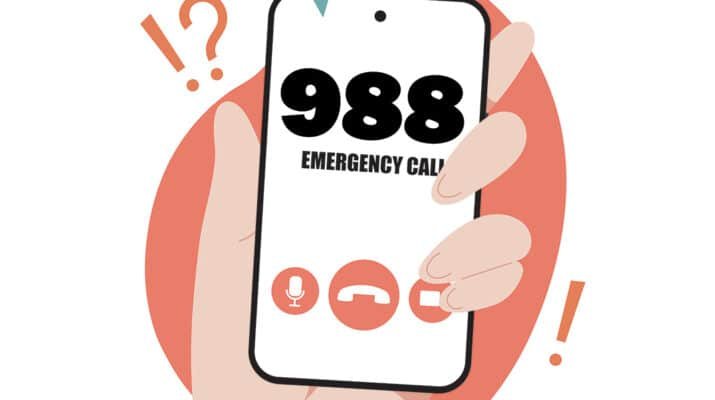
‘As a 988 text and chat counselor, I have worked with more than 5,000 individuals seeking support’
By George Cassidy
Mental health crises rarely announce themselves with clarity. They often arrive quietly, through sleepless nights, racing thoughts, persistent anxiety or a sense of emotional overload that makes even simple decisions feel impossible.
For many people, the hardest part isn’t the crisis itself but knowing where to turn.
That uncertainty is precisely what the 988 Suicide & Crisis Lifeline was designed to address.
Launched nationwide in 2022, 988 offers free, confidential emotional support 24/7 via phone, text or online chat.
It represents a major shift in how mental health distress is treated in the United States—not as a law enforcement issue or last-resort emergency, but as a public health concern rooted in care, prevention and human connection.
As a 988 text and chat counselor, I have worked with more than 5,000 individuals seeking support.
While suicide prevention is a critical part of the service, many people who contact 988 are not suicidal. They are anxious parents, isolated seniors, overwhelmed caregivers, people navigating grief, illness, financial stress or major life transitions. What they share is a need for immediate emotional support, someone to listen without judgment and help them steady themselves.
When someone reaches out to 988, they are connected to a trained crisis counselor, often within their state or region. Counselors are educated in trauma-informed, person-centered approaches that prioritize emotional safety, autonomy and respect. Conversations begin with open-ended questions: What’s going on right now? What feels hardest in this moment? What kind of support would help?
One common misconception is that contacting 988 automatically leads to police or emergency medical involvement.
In reality, emergency services are a last resort, used only when there is imminent risk and no other way to ensure safety. Most interactions focus on de-escalation—helping the nervous system settle, clarifying emotions, and identifying coping strategies that can reduce distress in the moment.
This approach aligns closely with preventive health principles. Emotional crises often escalate when people feel isolated or unheard. By providing early intervention, 988 helps prevent situations from becoming emergencies.
Counselors can also connect individuals to local mental health providers, community clinics, peer support programs, and other resources, acting as a bridge between immediate support and longer-term care.
For healthcare providers, caregivers, and wellness professionals, 988 fills a critical gap. Many patients experience emotional distress that doesn’t meet criteria for hospitalization but still significantly impacts their well-being, sleep, relationships, and physical health. Recommending 988 gives patients a tool they can use outside of appointments, during nights or weekends, when distress often peaks.
Another important aspect of 988 is accessibility. There is no cost, no insurance requirement, and no need for a diagnosis. Language support is available, and specialized services exist for veterans, LGBTQ+ individuals, and other populations with unique stressors. This low barrier to entry makes 988 especially valuable for people who face systemic obstacles to mental health care.
What remains striking in this work is how often callers hesitate, apologizing for reaching out or questioning whether their pain is “serious enough.” That hesitation reflects a broader cultural message, that emotional suffering must reach a breaking point before it deserves attention. 988 quietly challenges that idea by meeting people earlier, with compassion rather than crisis thresholds.
Mental health is inseparable from overall health. Chronic stress, anxiety, and unresolved emotional pain contribute to sleep disorders, cardiovascular risk, immune dysfunction, and diminished quality of life. By offering immediate, supportive care during moments of distress, 988 functions as a preventive health intervention, one that reduces isolation and supports resilience.
In a healthcare system under strain, 988 is not a cure-all. But it is a vital new front door: one that opens with a simple call or text, and leads not to judgment or urgency, but to care, steadiness, and the reminder that no one has to navigate emotional pain alone.
 George Cassidy is a freelance journalist and mental health professional with extensive experience in crisis counseling, suicide prevention, and community-based health education. He currently serves as a text and chat counselor with the 988 Suicide & Crisis Lifeline, bringing a frontline perspective to his writing on mental health and public well-being.