
By Deborah Jeanne Sergeant
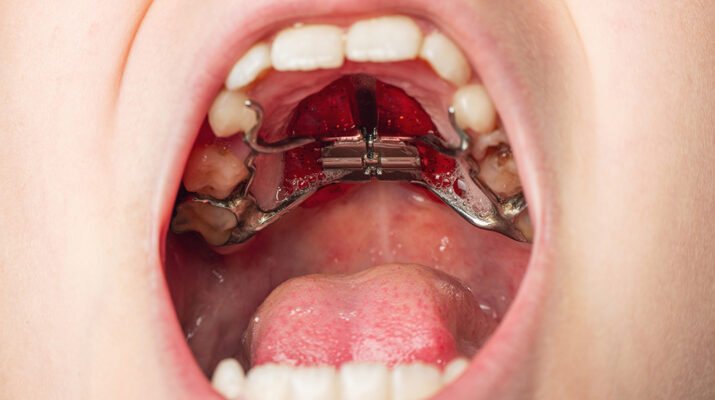
 It’s not uncommon to see a young child with a palatial expander. The orthodontic device isn’t traditional orthodontic braces. However, it can help children with a functional problem such as crossbite. An expander may also reduce the need for orthodontic braces later.
“Widening of the palate in young children is often recommended for those children who have severe crowding of their teeth,” said dentist Matthew Hall, director of the St. Joseph’s Health Dental Residency Program. “A palatal expander expands the palate and takes advantage of the patient’s growth to make more room for the erupting permanent teeth.”
In younger children, the mid-palatial structure in the roof of the mouth is comprised of two bony parts that begin to fuse by puberty. An expander helps by gradually moving those two bony parts away from each other so bone will fill in the area to widen the palate. Providers wait until the first molars are in place so they have a place to anchor the expander.
Some people may think waiting for orthodontic treatment until their children are teens, the traditional age for a “tin grin.” But Hall said that expanders can help fix and repair crowding issues. It can be difficult to predict if they will need braces; however, with a functional, widened palate, the chances are better that the patient won’t need braces.
“Once the child has matured and the permanent teeth have all erupted, these teeth will not require as much comprehensive orthodontic treatment as they would have without the use of a palatal expander,” Hall said.
He warned that delaying the onset of orthodontic care may cause crowding to the extent where the patient will need healthy teeth to be pulled to allow room for alignment of the rest of the teeth.
Cynthia Wong, doctor of dental surgery and chairwoman of pediatric dentistry at Eastman Institute for Oral Health, encourages parents to seek screening for their children at a pediatric dentist’s office or an orthodontist’s office. Most orthodontists will evaluate potential patients for free without further obligation.
“Per the American Academy of Orthodontists and the American Academy of Pediatric Dentists, we recommend children are screened for jaw problems at age 7 at the latest,” Wong said. “I don’t think an orthodontist will see a child younger than that unless there’s a big problem. I perform a jaw evaluation at every appointment every six months. I detect many problems early. Some would benefit from receiving palatal expansion. Most children will get it once they start losing baby teeth at about age 8. It depends on what the problem is and how urgently we need expansion to happen. Some kids get it earlier; some later.”
A little after puberty, the palate completes the fusing process and palatial expansion is not possible.
“Once corrected, because both pieces are fitting, the upper and lower jaw will grow harmoniously,” Wong said. “It’s much more stable after palatal expanders. Otherwise, we can move the teeth and make it work. But I always talk about the teeth and jawbone are like the flower in the flowerpot. Plant it in the middle. It won’t grow as well if you have to move it from the edge to the middle after it’s grown.”