
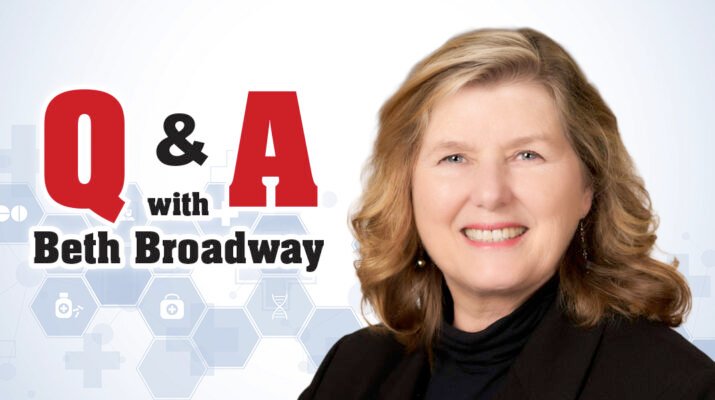
CEO of InterFaith Work looks back on a long career helping others
By Mary Beth Roach
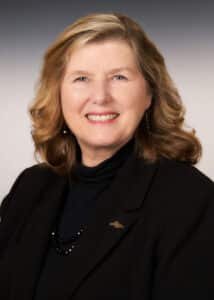 Before Beth Broadway retired at the end of October as president and CEO of InterFaith Works, she shared some of her thoughts of the agency’s work over the 30 years she’s been there, 16 years as the president and CEO, nine years on staff as the director of the community-wide dialogue to end racism, and then five additional years as a consultant to the agency.
Q: What is the focus of InterFaith Works?
A: Our tagline is “Affirm Dignity,” which is really about affirming the humanity in every person, no matter what kind of gift wrapping they came to the Earth in, but our mission is to build bridges of understanding in order to bring about racial equality and interfaith understanding. So, all of our programs that provide for basic needs and support people in the community are based in this idea that we’re here for everybody.
Q: How has the work of the agency evolved over the past 30 years?
A: We used to be a $1.2 million operation. In January of this year we were at $10 million. So, you can imagine that 10 times budget has allowed us to do significant additional work in the community.
In our refugee area, we were just doing resettlement when I started. But now we have a full-service employment office where people can get resumes and job training and be matched to an employer and have coaching, and we can do intervention. We have a full-service housing department that helps with low-income housing and issues between landlords and tenants. We’ve had great success with that.
We have a whole division that looks at trauma-informed care for refugees, so that if they were tortured or saw terrible things in the camps during the war that they fled, we can help them with their medical and emotional needs, as well as the family wellness. And then, finally, in our dialogue area, we continue to do the dialogues to end racism in their many forms. We’ve added a lot of programming — youth leadership. We have a Seeds of Peace program now. We have a food justice program and we’re supporting a pantry partners network of faith communities and organizations. We have 31 pantries now that we’re providing support to out in churches, refugee groups and other faith communities. We help them to get refrigerators and freezers to expand their ability to serve healthy foods. And we’ve been starting to build out community gardens next to some of these pantries.
We began to do some surveying of what’s happening in the nursing homes. Are they aging with dignity in nursing homes? And we found that 65% of our nursing home residents did not have a visitor. So, we started a program called One to One, where people can become a one-hour-a-week volunteer to do that weekly visit or more if they can, and build a relationship with an elder so they have somebody to look forward to seeing every week. And then we looked at our elder programs across all of the various senior serving agencies doing as much work as they could be doing in Black and Brown communities and we’ve challenged ourselves to have race-based accountability in how services are provided.
It’s just been an evolution of all the things that we were doing in smaller scale but expanding the breadth and the depth of the work.
Q: How has the need changed?
A: We have always been, unfortunately, a community that has lower income than some other places and real poverty. The poverty in Syracuse is very, very high, compared to other cities of our size. So, the needs for people are very great. InterFaith Works is celebrating its 50th year starting now and into all of next year and we want to continue to expand programming to serve the needs of people as well as connect us to each other so that we’re not afraid of each other because we’re poor or because of our skin color or how we worship. And I think that that’s one of the things that has changed. The divisions are greater and the poverty is higher and we’d like to continue to be part of the solutions.
Q: What do you see as your greatest accomplishment?
A: I think because of the kind of programs and the compassionate care and carefulness with which we’ve built out the programs, my biggest accomplishment is that we are very connected and a deeply trusted anchor human service agency.