
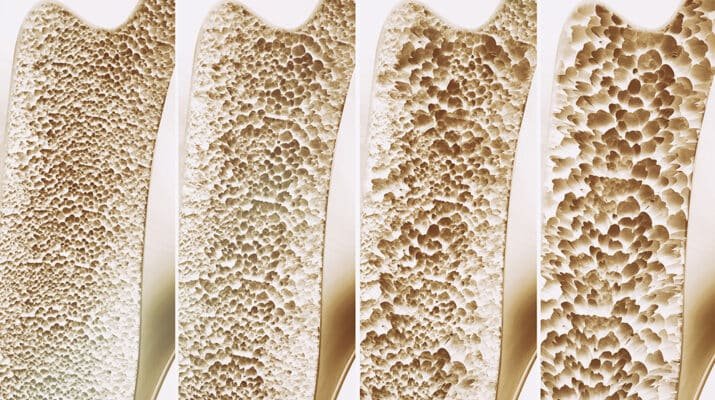
Try these tips to protect your bones
By Deborah Jeanne Sergeant
Eighty percent of Americans with osteoporosis are women, according to the Bone Health and Osteoporosis Foundation, a nonprofit organization dedicated to promoting awareness about bone health.
About half of women older than 50 will experience a broken bone because of osteoporosis.
Women are at higher risk for breaking a bone than men because of their smaller, thinner bones. Plus, as their estrogen levels decline because of menopause, that protective factor of the hormone elevates risk.
In addition, most people tend to need medication as they age and some prescriptions can leach calcium from bones.
Susan E. Brown, Ph.D. and director of The Center for Better Bones in East Syracuse, said that about a dozen popular medications can increase fracture risk, including proton pump inhibitors, diuretics and glucocorticoids, but through different mechanisms. Many Americans take proton pump inhibitors. This class of medication fights heartburn.
She said that proton pump inhibitors increase hip fracture risk by 20% to 40% and spine fracture risk by 40% to 60%.
“Taking more calcium isn’t the point,” Brown said. “These disrupt the whole body. We’re studying what happens within the body on the molecular level. As a whole, people get plenty of calcium. What you want to do is try to get to what’s really causing the problem.”
As people age, they naturally generate less stomach acid. Adding a proton pump inhibitor can cause the body to absorb even less calcium and the other nutrients needed to directly and indirectly support bone health such as magnesium, B-12, iron, zinc, vitamin C and more.
“It’s a cascade effect,” Brown said.
She advises asking medical providers about alternative medication that doesn’t have potential bone damaging effects.
In addition, Brown said many people don’t have a diet that supports bone health — and not just because they eschew calcium-rich foods such as dairy. It’s also important to consume trace minerals such as magnesium and vitamin K and omega-3 fatty acids, as these promote bone health. Mixed nuts are rich in these, among many other foods.
Brown recommends engaging in resistance exercise to stimulate bone formation. These can include body weight exercises such as push-ups, squats and calf raises; lifting weights, including free weights and weight machines; and using resistance bands. Working with a professional can help ensure correct form and posture.
She also advises clients to work on mitigating stress.
“Try meditation, finding a way to quiet the mind and whatever your spiritual tradition,” Brown said. “Find ways to develop resilience in the face of stress. Develop belief systems and communities that help.”
Vitamin D helps the bones absorb calcium among other important functions. Called the “sunshine vitamin,” is a pre-hormone the body generates upon exposure to sunlight. It is impossible to obtain sufficient vitamin D during the fall and winter in the North.
Very few foods naturally contain vitamin D and then it’s only in trace amounts. Commercially processed milk is typically fortified with vitamin D.
“Around this area, vitamin D is a good thing for people to take,” said Lindsay Gaffney, owner of The Organic Earthling in Oswego, who is a certified herbalist and is studying for doctorate in naturopathy.
Talk with a healthcare provider before making changes in supplementation, diet or exercise.