
By George W. Chapman
 Obamacare or the Affordable Care Act 2010. It has grown every year to currently cover 23 million of us. It lowered our uninsured rate to around 8% which is astounding in a country without universal coverage.
The ACA was a cooperative effort among commercial insurers, state and federal agencies, physicians and hospitals. It has been under attack by the administration. It’s been called “lousy care” and “a disaster” despite successfully covering 23 million people. I have not heard or read that any of the ACA founding partners want to kill the ACA. Probably because no one else has come up with a better plan than the ACA. Recently, the commercial insurers that agreed to participate have been vilified for excessive profiteering and jacking up premiums. First, the ACA limits insurance overhead and profits to 15% of premiums, 85% of premiums must be spent on claims. If not, any amount less must be refunded to the policy holders. The 15% limit applies to all products sold by the plans which include employer-based plans. Second, premiums go up because claims are going up. Again, plans can only retain 15%. The ACA by itself is not at fault for rising premiums. It has become a bellwether of the US healthcare system (and I use the term “system” loosely). Instead of forming a bipartisan commission to seriously consider a universal plan, it is easier for politicians to politically ostracize just one part of our system while ignoring the system-wide problem. So stop singling out Obamacare as “the disaster.”
 Vaccines: Measles Are Back
Thanks to vaccine denial and hesitation, measles, since Robert F. Kennedy Jr. took over, is making a nationwide comeback after being eradicated decades ago. Now the Kennedy CDC is recommending that only kids with a high risk of serious illness be vaccinated for the flu. For decades, based on scientific evidence, the CDC recommended that all kids over 6 months get the flu vax annually. Kennedy thinks his plan “is better” and then magnanimously suggests parents should do whatever they think best. The good news? Research shows the current flu vaccine (2025-26) has been highly effective in preventing the H3N2 subclade K strain currently spreading nationwide.
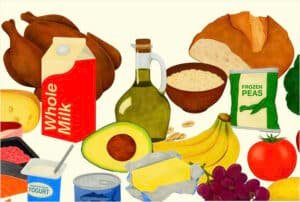 Food Pyramid: Red Meat, Cheese, Fatty Food
The RFK FDA has proposed a curious change to the famous food pyramid. After decades of FDA recommendations to limit red meat, cheeses, dairy products and fatty foods, they all now appear higher up on the food pyramid. RFK suggests we cook with “more butter and beef tallow.” (Beef tallow?) Not surprisingly, the group of “researchers” that formed the “scientific basis” for the changes have ties to the beef and dairy industries. A recent study by the Journal of the American Medical Association found 70% of Americans are obese. If we’re patient, maybe cigarettes will someday appear on the food pyramid.
Some Drugs Are Cheaper Now
Thanks to the Inflation Reduction Act, 15 drug prices are lower for Medicare recipients effective Jan. 1, 2026. Drugs that will cost up to 70% LESS are Ozempic, Wegovy and drugs to treat cancer, diabetes and asthma. Medicare negotiators are now hard at work on the next 20 drugs for 2027. However, rather than being relieved in having to negotiate only 15 drug prices (there are more than 30,000 drugs) the incredibly greedy and thankless pharmaceutical industry is actually seeking to have the Supreme Court rule the negotiations unconstitutional. Talk about chutzpah. It’s laughable. Led by AstraZeneca, they claim they have a “protected property interest in setting prices charged for drugs within the confines of a government run health plan.” Got that? Are they kidding? 15 prices? The drug manufacturers have to negotiate all drugs if they want to sell any drug in countries with universal coverage. (Canada, Mexico, Cuba, France, Italy, Spain, Britain, Germany to name a few). If the US is serious about lowering healthcare costs, why are we tip-toeing around the drug lobby? Thankfully, U.S. Solicitor General John Sauer is urging the Supreme Court to deny the drug maker’s request. The drug lobby “donates” close to $250 million a year to lawmakers.
 AI Answers Questions
Forty million of us look to ChatGPT for answers about our insurance and our healthcare. Queries about insurance include prices, deductibles, claims, denials, coverage and billing. There are literally billion of insurance and health queries each week. And 70% of questions occur before or after typical physician office hours. A disproportionate amount of questions come from rural states or “hospital deserts” where the nearest hospital is more than 30 miles away. AI is being used to supplement shortages of specialists in rural areas. It can prevent unnecessary trips to emergency departments and provide direction before seeking care.
 George W. Chapman is a retired healthcare business consultant who worked exclusively with physicians, hospitals and healthcare organizations. He used to operate GW Chapman Consulting based in Syracuse.