
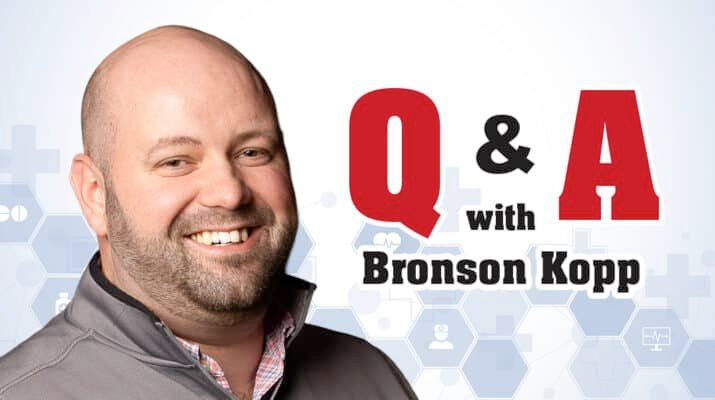
Executive director of Joseph’s House for Women in Syracuse explains how his nonprofit helps pregnant women and women with young kids ‘get on their feet’
By Mary Beth Roach
 Q: What is Joseph’s House for Women?
A: I guess the easiest way to describe us is a maternity home. But we’re really, I think, so much more than that. We consider ourselves a residential program and it’s the program where women can get back on their feet or get on their feet for the first time in their lives. They have to be either pregnant or have young children under the age of 5 in their custody.
Q: Can you provide an overview of the services you provide?
A: We are somewhat unique in the comprehensive level of services that we provide. We provide counseling, life skills classes, parenting classes, case management services and in addition, housing and all the things that accompany that. There’s food support, clothes, immediate needs. We try to be the long-term solution. They can stay with us for up to two years after they’ve had their child and that’s because we want to see real transformation. To see transformation, that takes time and investment.
Q: The women who come to you, are they leaving abusive situations?
A: They come from all sorts of circumstances —intimate partner violence is a big cause; chronic homelessness. There is usually generational poverty so the women coming to us sometimes have been bounced around the foster system. They may be referred to us by an OB’s office or a hospital. They may have spent time in other shelters. There are not a lot of shelters designed specifically for women who are pregnant or that allow women to stay after they have their children.
Q: How many women and children are you presently serving?
A: We have capacity for 19 women and their children at a time. I think we’re at 16 or 17 right now, plus the children.
Q: Are you seeing the number of women who come to you increase?
A: We’re seeing that the need for our services maintains a pretty high demand. It’s hard to equate that with whether there’s more women out there that need the services or we’re just doing a better job making ourselves available and getting our name out there. We are not seeing any drop in our call volume. We are seeing ourselves at or near capacity. We actually increased the capacity back in 2024 and when we did that, we’ve been at or pretty near capacity.
Q: Why do you think that might be?
A: There are a lot of services, but the problem is that a lot of those services are siloed. What I mean by that is there might be a service that offers shelter and there might be a program that’s located in another facility that offers life skills classes or parenting classes, but there’s no transportation and there’s no childcare provided. While there’s services out there, those services are not necessarily aligned with one another. That presents a complicated network or web these women are trying to navigate. It’s not a recipe for success.
Q: How are you funded?
A: We are pretty much privately funded. We receive all our donations from individual philanthropic support, some private foundations and some small businesses. We don’t take any funds from the state or any public money really.
Q: What geographical area do you cover?
A: The great majority of our residents come from Onondaga County. There are some that come to us from out of county or out of state. Those often present additional complications, particularly with regard to switching Medicaid, switching public benefits. That usually results in a delay of sometimes up to 60 or 90 days. There’s a whole process involved to cancel it in one county and reopen it another county. The other challenge is often custody arrangements.
Q: How do you track your success rate?
A: We say progress is success. Everybody comes to us from different circumstances. It’s hard for us to put across-the-board standards of success to say, ‘Everybody must live in this nuanced condition at this level with this level of employment and this level of housing.’ It’s based on where each person is. Success is not linear.
For more information about Joseph’s House for Women, visit www.jhfw.org or call 315-701-4981 (24-hour hotline, 315-288-0319)