

Eye catching black and white movie centers on loss, father-son relationship, disability
By Deborah Jeanne Sergeant
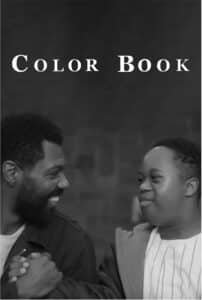 Beyond its accolades, the award-winning film “Color Book” is worth a watch because of its portrayal of Down syndrome.
Its main character, 11-year-old Mason, has Down syndrome and is played by actor Jeremiah Daniels, who has Down syndrome.
The movie centers on Mason’s relationship with his father, Lucky (Will Catlett) and how the loss of Mason’s mother affects their father-son relationship.
“Inclusion and representation of people of all abilities across different forms of media matter because these stories help shape how we see ourselves and one another,” said Brittany Goodrich, director of Kennedy Willis Center at Pathfinder Village in Edmeston.
The cinematography of the black-and-white film is eye catching and perhaps serves as a nod to the black-and-white, concrete thinking typical of some people with Down syndrome. It’s also masterfully shot and helps grab the attention through a somewhat slow-paced movie.
“Color Book” was funded in part by a $1 million grant from AT&T Untold Stories Award in 2023 and premiered at the Tribeca Film Festival in 2024. The film won awards at the Austin Film Festival, the Deauville American Film Festival, the Chicago International Film Festival and the Denver Film Festival.

Goodrich likes that Down syndrome is represented as only part of the main character’s identity, “but it does not define his entire story. Through this authentic representation, viewers see Mason navigating relationships, emotions, hurdles, victories and experiences that are deeply human and universally relatable.”
Mason’s Down syndrome affects daily life in a believable way — he is learning material most 11-year-olds have mastered, such as spelling his name — but his disability is not the center of the plot. Mason isn’t a gifted savant or a tragic blight on his family. He’s a kid who enjoys jokes, misses his late mother and longs to see a live baseball game. Filmmaker David Fortune found the happy medium in which most families live and the ups and downs of raising a child who has a disability.
Mason is not infantilized because of his Down syndrome but treated by others in an age-appropriate way. Occasionally, Lucky loses his temper as Mason makes mistakes, sometimes in the context of his disability and sometimes just because he’s an 11-year-old kid.
“In these moments, we can recognize ourselves, foster greater empathy and understanding and remember that there are far more similarities than differences between us all,” Goodrich said.
Throughout the movie, Mason chronicles his life in a coloring book he creates. The book offers Lucky a glimpse of his son’s outlook that can be both touching and amusing. It’s clear Mason, like his father, is processing his grief and trying to become used to the “new normal” of his life without his mother.
Throughout most of the movie, Lucky is trying to take Mason across Atlanta to watch a live baseball game. However, the setbacks they experience, such as the car breaking down, are not only because of Mason’s disability. Lucky is also learning how to navigate life without his wife, who in flashbacks appears as a patient, stable presence in Mason’s life.
“Color Book” is streaming on Netflix.