
By Deborah Jeanne Sergeant
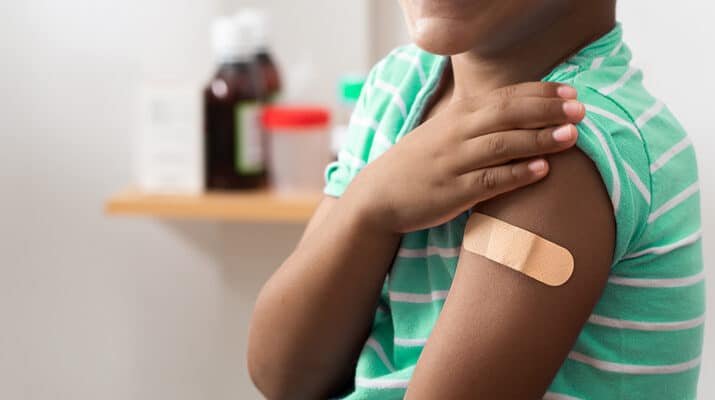
Among children born during the period of 1994–2023, routine childhood vaccinations prevented approximately 508 million cases of illness, 32 million hospitalizations and 1,129,000 deaths, according to the Centers for Disease Control and Prevention.
“Vaccines are considered one of the greatest public health achievements in modern medicine,” said Julie Colvin, family medicine physician at St. Joseph’s Health. “They have prevented millions of deaths and dramatically reduced disease.”
The CDC’s “Recommended Immunizations for Birth Through 6 Years Old” includes protection against respiratory syncytial virus (RSV), hepatitis B, rotavirus, diphtheria, pertussis, tetanus, influenza type B, pneumococcal, polio, COVID-19, influenza, measles, mumps, rubella, chickenpox and hepatitis A. Some of these diseases can cause lifelong impairment, disability or death.
COVID-19, RSV and influenza are optional.
Some parents delay scheduling routine vaccinations for a variety of reasons, which can cause tight schedules at the pediatrician’s office. Moving from a different area or other major disruptions in life can make it challenging to get the appointment. However, it’s necessary for attending public or private school.
“Before school starts, parents should review their children’s vaccine records and schedule any needed appointments as early as possible,” Colvin said. “Many medical practices have been very busy and waiting until the last minute can make it very difficult to get an appointment before school starts.”
Safety of vaccines is a persistent deterrent to some parents. Colvin encourages parents to use reputable sources of information when considering vaccine safety and efficacy.
“Routine childhood vaccines have been extensively studied and continuously monitored for safety,” she said. “Vaccines can help prevent diseases that can lead to hospitalization, long-term complications and even permanent disabilities. The WHO estimates that vaccinations save four million to five million lives worldwide every year. Diseases that once filled children’s hospitals and ICUs are now uncommon in countries with strong immunization programs. Childhood vaccination has been a major contributor to the dramatic increase in average life expectancy over the past century.”
She added that routine childhood vaccines have reduced these illnesses so dramatically that many younger physicians have never seen cases of polio, diphtheria and tetanus. But these diseases are not eliminated. They would return “if we were not vigilant about keeping our vulnerable young children vaccinated,” Colvin said. “Vaccines are one of the clearest examples of how preventive medicine has improved the health of children and populations worldwide.”
Polio case in NYS
David Larsen, Ph.D., infectious disease epidemiologist and professor and department chair of public health at Syracuse University, said that the first paralytic polio case in New York in more than a decade occurred because the parents did not want their child to receive vaccine for this preventable disease.
“Parents can take comfort that vaccine is the most researched intervention ever,” Larsen said. “There is so much research on safety and efficacy. The alternative is a risk not worth taking.
“These routine vaccinations are against diseases that are much worse than any short-term fever or crankiness they get. With pertussis or whooping cough, infants struggle to breathe and the only thing that prevents it is vaccination. Measles can cause encephalitis and death. It makes your immune system weakened against other diseases.”
Some parents worry about their children receiving so many vaccines in a short period of time.
Pediatricians base the schedule for vaccinations upon research indicating efficacy and safety. Parents do not need to worry that vaccines contribute to the development of autism.
“We know vaccination doesn’t cause autism,” Larsen said. “It’s been studied thoroughly. The original claim was based on falsified data. Autism begins much earlier in prenatal care. You can see it before birth even.”
In 1998, research published by researcher Andrew Wakefield studied only 12 children in a non controlled study attempting to connect autism to the use of the routine childhood “MMR” (measles-mumps-rubella) vaccine containing thimerosal, a preservative used in MMR vaccines. A trial size of 12 is far smaller than a population size required to derive causation. The study was later debunked. Despite this, manufacturers removed thimerosal from the US vaccine supply in 2001.
Parents connect MMR with autism because children receive MMR at the same developmental stage when parents can identify their children’s missed milestones (though many experts can detect autistic traits sooner). There is no causal relationship between MMR and autism. However, parents want to find out why their child has autism and incorrectly blame immunizations.
More than 40 reputable studies of more than 5.6 million children spanning 25 years have proven that vaccines don’t cause autism, according to the Associations for Autism and Neurodiversity website. Other bodies agreeing with this conclusion include the American Academy of Pediatrics, the American Public Health Association, the American Medical Association, the Infectious Diseases Society of America and dozens of other national organizations.
Some parents balk at routine childhood vaccination because they believe it will weaken their children’s immune system. Larsen said the opposite is true.
“The best way to strengthen it is through the vaccine,” he said. “When that child comes into contact with that virus, the immune system is stronger and repels that virus. It’s strength training for the immune system.”
Vaccines introduce a dead or significantly weakened contagion against which the body can easily mount a defense. This is why children may run a low fever or feel a little “off” for a day after vaccination. The vaccine trains the immune system how to fight off that contagion for the next time it is exposed. Without vaccine, the immune system must wage war against the invading contagion without any previous experience. It’s a sink-or-swim scenario that can have devastating results.
In areas where people remain unvaccinated, as many as one in five children become so ill that they require hospitalization. Widespread vaccination also helps protect vulnerable people such as babies before birth, newborns, the elderly and those who are immunocompromised because of medication or disease.
Not a Money-Making Drug
Parents concerned about children’s antigen exposure level from receiving “too many” vaccines at once should consider that every day, people are exposed to more than 4,000 antigens. Vaccines expose children to about 50 antigens.
Some people dislike vaccines because they think it’s a scheme by which doctors make money. Vaccines are not a huge money maker for manufacturers or pediatric offices. The medication is very low cost and widely covered by health insurance and distributed freely through clinics.
“No one makes money off vaccines except attorneys making money off frivolous lawsuits,” Larsen said. “The companies give it away for free.”
Concerned parents should discuss vaccines with their child’s pediatrician and visit www.letsgetrealaboutvaccines.org and www.healthychildren.org