
Most experience high levels of stress involving finances, weather, lack of health insurance
By Deborah Jeanne Sergeant

U.S. farmers face suicide rates 3.5 times higher than others, according to National Rural Health Association. Men who farm and ranchers die by suicide at a rate of 43–52 per 100,000 compared to 27–32 per 100,000 for the general population.
But why?
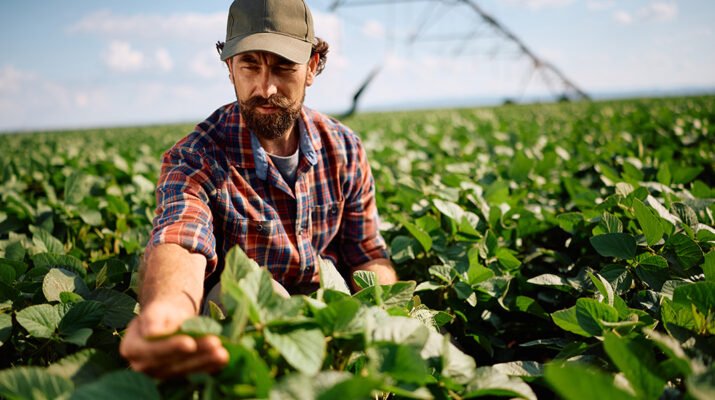
The glamorized image of the gentle farmer peacefully tilling the earth and tending grazing animals belies the reality of a dangerous, dirty, financially risky job that is more lifestyle than occupation. It’s a commitment to a way of life, often handed down with a family legacy, land and resources like animals, buildings, equipment and tools. Leaving farming behind would mean selling all of that, moving into a new home and stepping away from a familiar routine of caring for animals and crops. It’s far different from the proposition of commuting to a widget factory instead of a what’s-it factory for a less stressful job.
“In terms of psychological and social factors, a common theme that comes up is being alone and stressed which is consistent with the overarching theme that we have encountered in our clinical practice which is the feeling of being ‘stuck alone with overwhelming pain,’” said physician Sutanaya Pal, assistant professor in the Department of Psychiatry and Behavioral Sciences at Norton College of Medicine at SUNY Upstate Medical University.
Even on a farm that’s losing money, getting out can be financially complicated. Oftentimes, other family members own parts of the operation such as property and equipment essential to the farm’s functioning. The family may not be able to afford to buy out the person who wants to leave because their finances are also tied up in the farm.
Farming can be stressful day-to-day, as animals, chemicals, equipment, structures and dust can cause illness, injury or death. For example, 130 farmers die every year from tractor rollover accidents and about 10% of farmers will experience a rollover accident over their lifespan. Farmers can be killed by grain entrapment in silos, dismembered by power takeoff shafts and die from inhaling methane in a manure pit.
Most farmers experience financial stress. Weather, pests, animals and commodity prices are nearly always completely out of the farmer’s control. It’s one of the few professions where the business owner buys input at retail and sells products at wholesale.
Various strategies such as multiple sources of farm income, working off the farm and carrying types of insurance such as crop insurance can help mitigate financial downturns. But these are also challenging. Multiple sources of income from the farm can be hard to manage. Working off the farm while farming spreads the farmer’s time thin. And insurance adds more overhead to a business that’s already on razor-thin margins.
Since only 2% of the population farms, many people do not understand farming and those neighboring farms can cause stress by complaints about the farm’s odors, dust, animals and sounds.
Pal said that isolation can both contribute to mental health issues and also form a barrier to receiving help.
“Barriers to accessing mental health care are multifold with common problems being cultural stigma, the demands of the occupation and limited geographical access–being situated in rural areas,” she said.
Many rural residents would have to drive two hours round-trip to see a mental healthcare provider for an hourlong counseling session, equating three hours off the farm each week — unthinkable to many farmers.
One way to address that barrier is telehealth, which Pal said, “has greatly increased the reach of mental health services to remote areas.”
Most insurers cover telehealth sessions with therapists.
Many farmers lack health insurance. However, sliding scale fee providers and those offering lower rates for self-pay clients can make it easier to seek help.
Overall stigma about mental health is another reason that many farmers do not seek help. Stepping away from the farm to seek mental healthcare can be viewed as a moral failure, slacking off and shirking the incessant work the farm requires.
Even bringing up the topic can be challenging, despite the growing number of farmers dying by suicide. Katie Basu, is senior director at Farmers Supporting Farmers, a mental health organization in Corning that serves the entire state. She said that the oft-cited “22 a day” statistic about veterans who die by suicide in the US will likely be surpassed by farmers.
“People don’t like to talk about feelings, especially farmers,” Basu said. “We just push them down. Most people will talk about their stress.”
It’s important for loved ones to truly listen to the farmer talk about what’s going on at the farm and to ask about seeking professional help. Oftentimes, a visit to a primary care provider is an easier segue into mental health.
“People get nervous about calling,” Basu said. “‘What will they do to me?’ they wonder.”
But she added that the goal of mental healthcare is not to remove people from their homes but to address the underlying mental health issues and pressures involved.
Sadly, the farm environment can be used as a means of death as farms are inherently dangerous and those who are struggling with mental health may think that if they experience an “accident” that results in death, the farm would receive a life insurance payout.
“If you look at OSHA statistics, farming is one of the more dangerous fields for people to work in,” said Adam C. Howell, outreach director at NY FarmNet at Cornell University. “There is heavy equipment, large animals, chemicals and environmental hazards. We know a couple farm workers in Central New York recently who ingested ammonia gas from a manure tank. Culturally, firearms are more prevalent.”
NY FarmNet offers free, confidential consultation services to all farmers and farms in New York state, regardless of size of commodity. The services include personal and mental health support and business consulting.
Howell said that Farm Aid, Rural Minds and the US Department of Agriculture offers programs to help foster interest in mental health among farmers, along with addressing the struggles farmers face.
“NY FarmNet is one of the best equipped in the country as we supply social workers to address stress, family communication and anxiety,” Howell said. “We don’t provide clinical services, but some of that initial services so farmers can be introduced to the fact that financial struggles affect mental health. It’s an interesting ecosystem with a lot of different groups organizing to help farmers.”
For help, contact:
• Farm Aid Hotline, 800-FARM-AID (327-6243) Monday-Friday 9 a.m. to 9 p.m.
• AgriStress Helpline 24/7, call or text 833 897 AGRI (2474)
• 988 Suicide and Crisis Lifeline 24/7
• 2-1-1, a comprehensive hotline that connects callers with local resources