

By Eva Briggs, MD
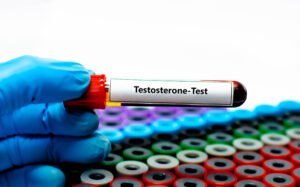 Recently military leadership announced plans for mandatory screening of testosterone levels of all servicemen older than 30. Those younger could elect voluntary screening for low testosterone, often called low T. Men identified with low T would be offered voluntary testosterone replacement therapy. So far, no plans have been announced for hormone screening of women.
Like many physicians, I believe that this is not a well thought out plan. This column explains the reason for my opinion.
Testosterone is a hormone found in both sexes. In men it is primarily produced in the testicles. Women produce smaller amounts of testosterone in their ovaries. Both sexes produce small amounts of precursor substances in their adrenal glands. These precursors can be converted into testosterone.
The brain dictates the production of testosterone. The hypothalamus, part of the brain, produces a chemical signal called gonadotropin releasing hormone (GnRH). GnRH travels to the pituitary gland and signals the pituitary to make luteinizing hormone (LH). LH travels via the bloodstream to the testes or ovaries, which respond by synthesizing testosterone. Low testosterone could be caused by disease or damage to any of those structures: the hypothalamus, the pituitary or the gonads.
Measurement of testosterone in the bloodstream should be done fasting and in the morning. A low measurement should be repeated for confirmation.
Levels of testosterone in men peak in the late teens and early 20s and naturally decline as men age. When an arbitrary cutoff for low testosterone is used, as many as 17% of men might test as low. But when further testing is done, correlating symptoms and other findings, only 2% of men actually may have low T that could benefit from hormone replacement.
Testosterone affects muscle growth, the body’s pattern of fat deposition, hair and beard growth, and sexual function. Low T can make men feel tired and weak, but it’s only one of many causes of those symptoms.
There is no evidence that supplemental testosterone will make men with age-related decreases in testosterone levels feel more vital or reverse aging. It may increase muscle mass and that is why supplementing with testosterone and similar steroids is banned in most sports.
Testosterone supplementation has many potential adverse effects. It can lower sperm production and lead to infertility. That effect doesn’t necessarily reverse when testosterone is discontinued. It can cause the testicles to shrink. It may cause men to develop breast tissue, called gynecomastia. It can raise the red blood cell count leading to blood clotting, such as pulmonary embolism (blood clots in the lungs).
And there is the question of aggression. Testosterone can increase aggression and irritability. But not in everyone, fortunately. It seems to have the greatest effect on people whose personalities are naturally more aggressive or irritable. And if you increase a soldier’s aggression, it might be directed to fighting with barrack-mates rather than enemies. It doesn’t necessarily turn men into better warriors.
Testosterone is not absorbed by mouth. It can be injected. It can be implanted in pellets under the skin. Both of those methods can lead to wide swings in testosterone levels, perhaps too high right after administration but dropping too low before the next dose. The input of a physician for monitoring, dose adjustment and evaluation of response is essential. Testosterone can also be absorbed through the skin via a gel or patch. Care is required to prevent close contacts such as spouses or children from inadvertently touching and absorbing the topical testosterone.
The reasons that I feel that wholesale screening of the military for low T is not a well thought out plan include the following:
• Screening potentially overidentifies many men whose low testosterone level does not indicate a true deficiency, known as hypogonadism. We know that screening might indicate that 17% of men have low T when only 2% are actually deficient. That calculates out to seven men unnecessarily exposed to all the risks of testosterone therapy for every one who might benefit. A young soldier might not fully understand the risks until irreversible harm has been done.
• Will any follow up testing be done for those who test low? If not, will actual disease affecting the testes, hypothalamus or pituitary be missed and undiagnosed?
Since there is no proof that large scale supplemental testosterone will actually make men better “warriors,” it seems to me like an expensive and unwise use of money that our military and the country could put to better use.
 Eva Briggs is a retired medical doctor who practiced in Central New York for several decades. She lives in Marcellus.