

By Anne Palumbo
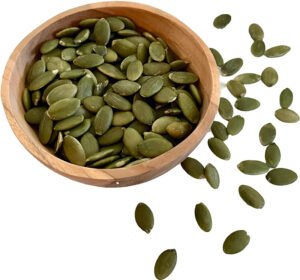 My love affair with pumpkin seeds began innocently enough.
I spotted them naked in a see-through bag at the grocery store and thought: I think I’ll give those babies a whirl.
After just a handful, I was smitten.
Once I discovered their hidden trove of nutrients, I was ready to walk down the aisle.
I eat pumpkin seeds every day, sprinkling them in all sorts of foods: oatmeal, cottage cheese, salads, smoothies, meatloaf, and more. But because they’re mildly caloric and contribute some fat (mostly the heart-healthy kind), I eat them in moderation: about a quarter-or halfcup throughout the day.
Why the steadfast consumption? These tiny treasures are loaded with a critical nutrient we all need to thrive: magnesium. And by loaded, I’m talking 40% of our daily needs in an average quarter- cup serving.
Quite remarkably, magnesium is involved in more body reactions than any other nutrient (up to 600).
From helping to regulate both blood pressure and blood sugar to boosting energy to maintaining nerve and brain health, magnesium is crucial for overall health and healthy aging.
Another benefit that excites, or rather, calms me, is this mineral’s ability to potentially ease anxiety, relax twitchy muscles and promote restful sleep. A notoriously bad sleeper, I’m fond of any food that helps deliver me to the land of Nod.
If you’re wondering what happens when you don’t consume enough magnesium (and close to 50% of Americans don’t according to the National Institutes of Health), you may develop leg cramps (especially at night), tire easily and experience tingling in the hands or feet.
But magnesium is just the tip of this seed’s nutritional outlay. A quarter-cup serving of these crunchy gold mines also provides 9 grams of protein, 2 grams of fiber, 13 grams of (primarily unsaturated) fat, and 4 grams of carbohydrates: all for a reasonable 160 calories.
Helpful Tips
Although most people tolerate pumpkin seeds well, those with seed allergies or digestive issues may want to consult their doctor before consuming. Buy raw hulled seeds if you prefer to roast them at home and roasted hulled seeds for immediate consumption. Always check the roasted seed’s package label for additional ingredients, like oil, salt, and seasonings. Store-bought pumpkin seeds typically last for up to a year if unopened in the pantry, or about three to six months after opening. Pumpkin seeds that have gone bad smell like old paint and are less crunchy.
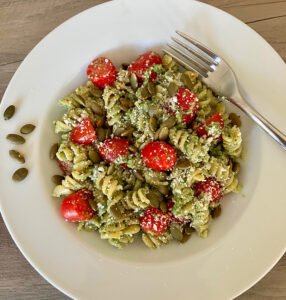 Pasta With Pumpkin Seed Pesto
Serves 4-6
Adapted from food writer/cookbook author Genevieve Ko
Ingredients
2 garlic cloves, peeled
1 pound fusilli or other short, curly pasta
½ cup pumpkin seeds, plus more for sprinkling
2 tablespoons fresh lemon juice
¼ teaspoon salt; coarse black pepper to taste
3 cups fresh basil leaves, lightly packed, minus stems
¼ cup pasta water
½ cup finely grated Parmesan, plus more for sprinkling
¼ cup extra virgin olive oil
1½ cups grape or cherry tomatoes, halved
Instructions
1. Bring a large saucepan of generously salted water to a boil. Drop the garlic cloves into the boiling water and boil for 30 seconds to temper their sharpness. Use a slotted spoon to transfer the cloves to a food processor or blender.
2. Drop the pasta into the boiling water and cook until al dente (according to package directions).
3. While the pasta cooks, add the pumpkin seeds, lemon juice, salt, and pepper to the garlic, and process until finely ground. Scrape the sides of the bowl and add the basil. Scoop ¼ cup water from the saucepan with the boiling pasta and pour over the basil. Process the basil until ground to a paste. Add the Parmesan and oil and pulse until combined. Taste the pesto and adjust seasonings.
4. Drain the pasta and rinse under cool water until room temperature. Shake dry, then return about 6 cups to the saucepan, reserving the rest for another use. Add the pesto and tomatoes and stir well until everything is evenly coated. Serve immediately, garnishing with more pumpkin seeds and Parmesan. Refrigerate leftovers for up to five days.