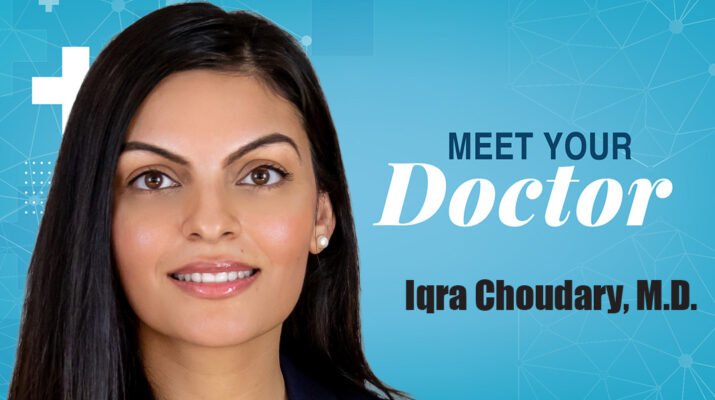
HOACNY oncologist and hematologist discusses rising cancer rates among younger adults, clinical trials and the promise of innovative bispecific therapies she has helped advance locally
By Chris Motola
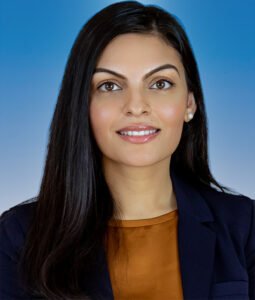 Q: How long have you been with Hematology-Oncology Associates of CNY?
A: I will be reaching five years in the spring. I worked in Maine for about four years, but I trained here in Upstate New York. I was at University of Rochester, Wilmot Cancer Institute. So, I was in Rochester for six years and then worked in Maine for a few years and came back to the area.
Q: And you were coming from an administrative position in Maine? Are you purely clinical now?
A: Yeah, I did serve as an interim medical director at Northern Light Cancer Center in Presque Isle, Maine. I do more clinical here, but I am part of the pharmaceutical committee and also part of the thoracic multidisciplinary group. I’ll be taking on the melanoma and skin cancer line as well.
Q: Who makes up your patient base?
A: I usually see a lot of our west-end patients in Syracuse. I split my time between Auburn and Camillus offices. I kind of see all cancers but tend to see more of thoracic and malignant hematology.
Q: What got you interested in that?
A: I think it’s just the data and the evolving landscape for both of these types of cancers. There have just been so many new developments. We have much more to offer our patients. We also have a patient base that we can help. The west end [of Syracuse] does have a higher smoking population than average and we have patients who worked at the steel mill, so there’s a lot of environmental exposure factors. So, I just naturally see more lung cancer in that area.
Q: Smoking is well-known risk factor, of course. What are some of the risks from working in a steel mill?
A: It’s really the fumes that are prevalent there. And then, in addition to that, Syracuse has higher levels of radon around us too. It’s a very hilly area and radon increases risk of lung cancer over time.
Q: What are some interesting new developments and science in your field?
A: So, for our malignant team, one of the projects we started at HOA about a year and a half ago now, are bispecific therapies. And these are treatments that kind of augment the body’s immune response to fight the cancer, as opposed to the chemo, which directly kills cancer cells. We’re probably one of the first community practices to start providing this to patients in the country. Otherwise, these treatments are mostly available at academic centers. So, we’re pretty excited to be able to offer our patients these therapies and just be involved in it.
Q: Are you involved in research at this point?
A: Yeah, everyone here is involved in research. I am involved in a lot of like the lung cancer trials, some of the breast [cancer] trials. We do actively enroll our patients onto clinical trials and try to open up new trials where we see fit.
Q: Cancer rates and deaths often seem to get aggregated together at the population level. But when you break them into different types, we seem to be doing very well battling some of them, but not others. What trends are you seeing?
A: I think in terms of problematic cancers, we’re probably seeing more breast and GI cancers in younger population between 30 to 40 and I think that is a population that’s not as prevalent in our current clinical trials. I think the thought process is that it’s due to environmental exposures and dietary changes, lifestyle changes. So, I think that’s an area that requires more attention and studying and even like social and emotional support, because a lot of these patients are younger. Then things that we’re doing well against. So, we’ve made a lot of headway in multiple myeloma and that is because of things like CAR T-cell and bispecific therapies. Also, lung cancers with our immunotherapies and more advanced radiation and surgery techniques, Pancreatic cancer recently at ASCO [American Society of Clinical Oncology] this year; there’s been a new drug that targets the RAS mutation. So, prior to this, we really didn’t have many options for our pancreatic cancer patients. The drug got the standing ovation because it’s extended survival in these advanced pancreatic patients by over a year. So that’s pretty exciting. And it was just approved by the FDA a few weeks ago. So, we’re able to offer it to our patients in the community too.
Q: What percentage of pancreatic cancer cases does the RAS mutation account for?
A: It would be a majority of the patients because a lot of pancreatic cancer presents more in the advanced setting than it does in the earlier stages. So that medication is for the advanced pancreatic cancer patients.
Q: At what age should people begin becoming cancer-aware, particularly given that some cancers may present earlier than current screening guidelines account for?
A: If you have a strong family history, I think that should be relayed to their primary care provider. But on the other hand, we used to say at what age we should be more worried. I don’t really think that applies today. I think if anyone has concerning symptoms or they’re noticing any abnormalities anywhere on their body, I think you know it should be taken seriously. For GI symptoms, look for changes in bowel habits, unintentional weight loss, appetite changes, blood in the stool and for breast cancer, any like lumps or tenderness. These should be evaluated sooner rather than later. Lymph nodes under the arm is another one.
Q: What does HOA’s Wellness Center offer?
A: So, at our Camillus office, we do have a wellness center that offers support groups and supportive therapies. They do things like massage therapies and yoga and kind of different classes and just kind of meeting other survivors for patients. I think it’s a great asset. Any exposure it gets would be beneficial to the patients.
Q: Another oncologist I spoke to recently was talking about research into the effects of exercise on not just cancer prevention, but its possible link to better treatment outcomes and therapy tolerance. Any thoughts on that?
A: Yeah, I think any sort of like exercise, dietary modification, lifestyle changes in the positive direction definitely helps patients tolerate treatments much better and improve their chances of completing their treatments and doing well in the long run.
Lifelines
Position: Hematologist and oncologist at Hematology-Oncology Associates of Central New York
Hometown: Toronto, Canada
Education: American University of Antigua College of Medicine; residency at Rochester Regional Regional Health; completed oncology specialty training at the University of Rochester Medical Center-Wilmot Cancer Institute, where she served as chief fellow
Affiliations: Crouse Hospital, St. Joseph’s Health Hospital
Organizations: American Society of Clinical Oncology; American Society of Hematology; American Board of Internal Medicine; International Society on Thrombosis and Haemostasis
Family: Husband, children, cats
Hobbies: Reading fiction, archery, traveling