

New urologic oncologist at SUNY Upstate comes from Mount Sinai Hospital in NYC, where he trained and practiced for nearly a decade. He discusses prostate cancer diagnosis and sexual function after prostate surgery
By Chris Motola
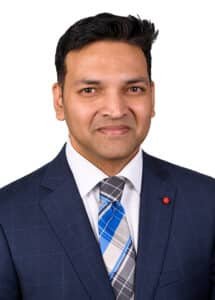 Q: You’re coming from Mount Sinai Hospital, which is a pretty prestigious system in New York City. What made you want to pivot to Upstate?
A: I was at Mount Sinai for the last eight years and I valued my experience with the people I worked with there. Upstate has appealed to me as a place where I can contribute to prostate cancer care while developing my research and teaching. I had a great experience providing prostate cancer care, robotic surgery and doing research in Mount Sinai and I’m grateful to my colleagues and mentors. But moving to Upstate, I think, is an opportunity to apply that experience to a community and develop a new stage of my academic work.
Q: What kind of research are you involved in at Upstate?
A: My published work has been mainly regarding the prostate, the use of prostate imaging, use of MRI, biomarkers in prostate cancer diagnosis, such as 4Kscore, active surveillance. My main strength is robotic prostate cancer surgery and I think my most valuable contribution is on the hood technique. I am the first author on that paper on a technique for prostate surgery that has gained a lot of popularity in the world. I think I got more than 200 citations on that. So that’s something that I value a lot. I do have experience with focal therapy, like treating only targeted parts of the prostate, such as high intensity focused ultrasound. That’s where we use ultrasound waves to target the cancerous area of the prostate while keeping rest of the prostate as it is. If the patient has no cancer and they have only enlarged prostate, then I am skilled with aquablation of the prostate as well as regular endoscopic procedures.
Q: How often can you retain prostate function versus full removal?
A: So, it depends on how exactly you look into it. We start with screening first. So, men after 55 years of age, we try to screen them with the blood test. It’s called PSA and if PSA levels are elevated then we recommend doing some imaging in the form of MRI and, based on that, we see if there is anything suspicious in the prostate. We may do transperineal MRI, ultrasound fusion, prostate biopsy. So, MRI helps us to target suspicious areas in the prostate and transperineal biopsy takes samples. We go in through an opening between the scrotum and anal opening so that we can avoid going through the rectum, which helps avoid infections. So, when I was medical director of the mobile prostate cancer unit at Mount Sinai, we screened around 15,000 people since 2022. So, I would say 1 in 6 African American men and around 1 in 8 Caucasian or Asian men get prostate cancer. The risk increases with age.
Q: Is that lifetime risk or risk at a specific age?
A: Lifetime risk, but it’s very uncommon to see it before age 35 and most cases are in patients older than 55.
Q: If you find elevated PSA readings, but no cancer, what’s the course of action?
A: So, if the PSA is elevated and we have an MRI prostate done, an MRI had shown suspicious areas and we do the biopsy. After the biopsy, if there is no cancer, we can keep following them up. If there is a cancer, based on what kind of cancer someone has, then we decide the next steps. Usually, 50% of those men will have what we call insignificant prostate cancer or what we call Gleason 6 prostate cancer. For these people we usually try to do active surveillance. Usually, around 75% to 80% of those patients stay on active surveillance since the cancer can upgrade.
Q: What advantages does robot-assisted prostate surgery offer?
A: So, the surgeon controls the instruments throughout the operation with the robot. The robotic system provides a magnified view and the instruments can move precisely in a confined space. This is the best approach. Robotic surgery offers useful technical advantages, so that you can be more precise in removing the cancer and keeping structures intact, like muscles, fascia, nerves, which will help with patient continence and sexual function afterwards.
Q: Can men usually retain sexual function without their prostate?
A: I have an upcoming project that will be looking at the nerves around the prostate, a neuroanatomy of the prostate. So, this is a complex topic. If the patient has cancer, which is only contained within the prostate, we will be able to spare nerves around the prostate and we hope that could possibly help with sexual function. But it depends on the individual patient, how their sexual function was before the procedure, how they are doing afterwards. Damage to the tissues happen during the procedure, so this is a complex network of the of the nerves which we try to spare. But again, we don’t stop there. We try to make sure that patient understands the importance of rehabilitation and prehabilitation before the surgery, so that they are able to get the sexual function back more quickly if possible.
Lifelines
Position: Assistant professor and urologic oncologist at SUNY Upstate Medical University
Hometown: Ahmednagar, India
Education: Bachelor of Medicine, Bachelor of Surgery degree (BMBS) from Government Medical College, Akola, India; Master of Surgery (MS), SRTR Ambajogai, India; Master of Chirurgiae (MCh), King Edward Memorial Hospital, Mumbai, India; urologic oncology fellowship, Kokilaben Dhirubhai Ambani Hospital, Mumbai, India
Specialty: Urologic oncologist with a clinical and research focus on prostate cancer diagnosis, robotic surgery and functional outcomes. Clinical expertise includes MRI–ultrasound fusion transperineal biopsy, prostate imaging, focal therapy with high-intensity focused ultrasound and robotic prostate cancer surgery. Research interests include image-guided diagnosis, predictive models, nerve preservation, urinary continence, and quality of life
Career: Mount Sinai Hospital: urologic oncology fellowship, laparoscopic urology fellowship, assistant professor. Has performed more than 100 aquablation procedures for symptomatic benign prostatic enlargement
Affiliations: SUNY Upstate Medical University Hospital; Syracuse VA Hospital
Organizations: American Board of Urology
Hobbies: Cricket, walking, running, swimming