
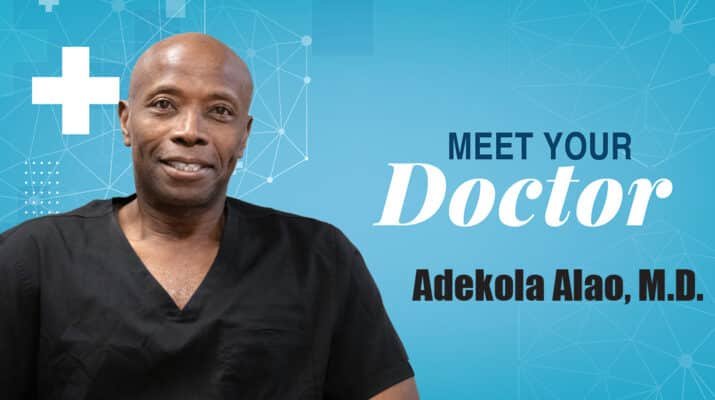
Oxford-trained psychiatrist who teaches at SUNY Upstate discusses new ways to treat depression — transcranial magnetic stimulation, a non invasive treatment that stimulates the area of the brain that’s strongly linked to the condition
By Chris Motola
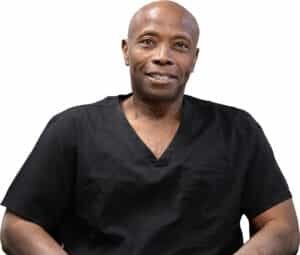 Q: You’re the co founder of a company that does transcranial magnetic stimulation (TMS) for depression.
A: Yes, TMS Restoration Psychiatry. It was co founded by me and my wife, Lola. She’s a psychiatric nurse practitioner. We founded the practice in 2016.
Q: Tell me a little bit about it.
A: So initially we started a regular psychiatric medication management and therapy practice. But then we noticed that a few of our patients — actually quite a few of our patients — did not do well with medication and needed something more, something more effective. So we looked for people that could do TMS around and we found nobody really. The person we found would not take patients on until the patients have cleared themselves with the insurance company. So my wife and I decided if somebody is struggling with depression, how can we expect them to navigate the complexity of insurance authorization? So we decided we’re going to start a practice where the patients don’t have to talk to the insurance company. We started a practice first in Baldwinsville and then we moved on to Fayetteville and now we have a location in Oswego County in Pulaski.
Q: What are some of the advantages of TMS?
A: TMS is a non-invasive treatment which uses Gen 2 magnetic pulses to stimulate the area of the brain called the prefrontal cortex. It is drug-free, and it requires no anesthesia. Patients can come in, get their treatment and go back to work or go back to school. There are no side effects like sexual side effects, weight loss or weight gain. You avoid all that because you go to the source of the problem, the prefrontal cortex of the brain.
Q: Side effects aside, how does it compare to medication in terms of outcomes for depression? Is it something you do along with medication? Or a replacement for it?
A: Good question. Most of the patients that we see are on one medication or more. Insurance companies generally don’t approve TMS until the patient has tried at least one or two medications. So, the way I like to talk about it is that medication works chemically, therapy works psychologically and TMS works neurologically. It activates the nerves of the brain, makes them function better if they’re not functioning well and reduces their functionality if they’re over functioning, to lead to complete restoration of the neural system. Most of the patients we see are patients that have not done well with medication. So, they’ve probably tried three, sometimes four, five, six, seven medications without any effectiveness. TMS works for most of those patients. However, if a patient hasn’t tried medication before, TMS is still going to work. But medication is so easy to prescribe that most people start with that first before we go into TMS.
Q: How cost-effective of a therapy is it?
A: So in the insurance context, it is covered by most insurance companies. When we first started, only a few insurance companies were covering it. But because of the data and the effectiveness, as well as patients advocating for themselves, almost all insurance companies have been covering it. And most recently, I think as of October, the good news is Medicaid has been covering it. It started covering it in New York state. Most of our patients that we see in Oswego County have Medicaid and this is just a breakthrough. We can then provide this groundbreaking treatment for patients in Oswego County.
Q: How long does a session last?
A: Each treatment lasts about 20 to 30 minutes, also depending on what we are treating, because TMS can be used to treat depression, anxiety, obsessive-compulsive disorder, post-traumatic stress disorder, ADHD and autism spectrum disorder. So we can manipulate the number of pulses and where to stimulate the brain by treating where we want to treat. Generally speaking, the insurance company will cover it for depression, anxiety and OCD. And we do 36 treatments. Each treatment lasts for about 20 to 30 minutes and it takes about six weeks to cover that. Now, having said that, there have been groundbreaking studies that show that we can do accelerated treatment. So we don’t have to limit ourselves to one treatment per day. We can do several treatments per day and get it done in a week or two.
Q: And do you have to return for treatments down the road? Are the results durable over time?
A: Great question. So we have three categories of people. There are patients that we treated six, seven years ago that we still follow up on that are still doing well. And we have some patients that have come back mainly about once every two years. They will come back. However, some patients come back sooner because they don’t want to go back to where they used to be. They see this groundbreaking treatment and ‘I’m like, OK, if I have, say, any symptoms that are coming back, I want to go and get it kind of fixed right away.’ Because when patients come back, they usually just need a touch-up.
Q: You mentioned ADHD and autism earlier. What effect does TMS have on those?
A: So, for patients in autistic spectrum disorder, we’ve treated probably about 20 of those. The behavioral problems and the aggression are something we notice that disappears quickly. We actually had a patient who went on vacation for the first time in his life. He was about 30 years old at the time he received TMS. He could not stand still because he had so much dis-control that he couldn’t go anywhere. After TMS treatments he was able to calm down. Now when patients with autism start we have an abbreviated three-minute treatment because most of them can’t sit for 20 minutes, which is fine because studies have shown that both the three minutes and the 20 minutes are equally effective.
Q: You studied at Oxford University and are originally from Nigeria. What are some of the differences you’ve noticed between how psychiatry is approached in all three countries?
A: I did my psychiatric training at Oxford University in England. I moved to England in 1996 and then I did another residency at SUNY Upstate between 1996 and 1998 and since then I’ve been in the faculty at SUNY Upstate and at Crouse and then I started this practice with my wife. So there used to be stigma associated with mental health. In Nigeria it is worse. What we see is people getting severely depressed, very suicidal, very depressed, very suicidal and almost sometimes killing themselves. Because in some of Nigerian language, there’s no word for depression. So if there’s no word for it, I can’t express it myself. England is much better. There’s much more awareness. But there are fewer opportunities to get help. For example, in the whole city of London, I know only maybe two TMS treatment facilities, none of which are covered by the National Health Service. So compare that with Syracuse, a much smaller city, where we have quite a few. We’re also in very rural Oswego County. So there’s so much access in the United States. And I think this is because there’s less stigma towards mental health.
Q: What is it like working with your wife in a practice like this?
A: Wow. That is a $10 million question. It has its benefits, but its challenges as well. We actually knew this was going to be complicated. So we went for a specialized therapy for couples that work together before we got into this. It helped, but it’s still quite challenging. My wife is very brilliant and resourceful, but separating work from home can be challenging. So I would not recommend it for everybody unless you can clearly separate home from work. And it’s not just us, TMS is not something just one person can do. I have a great team. There’s one particular person I want to point out. Her name is Vivian Roberts. Vivian serves as the TMS coordinator who leads all the other technicians. I would not be able to do 10% of what I do without Vivian. But to answer your question, it’s been an interesting journey.
Lifelines
Name: Adekola Alao, M.D.
Position: Professor of psychiatry, SUNY Upstate Medical University; co-Founder, TMS Restoration Psychiatry
Hometown: Ibadan, Nigeria
Education: University of Ibadan; Oxford University; SUNY Upstate Medical University
Affiliations: SUNY Upstate Medical University Hospital, Crouse Hospital, Connect Care
Organizations: American Psychiatric Association, Clinical TMS Society, Academy of Psychosomatic Medicine
Family: Wife (Lola), son (Dami, a doctor of physical therapy), daughter (Dey, a doctor of occupational therapy).
Hobbies: Personal fitness instruction, traveling, writing