
By Deborah Jeanne Sergeant
Artificial intelligence has become to some people as controversial as it can be used to create images and videos that are not real.
It is also used to generate copy such as term papers and articles with little human effort.
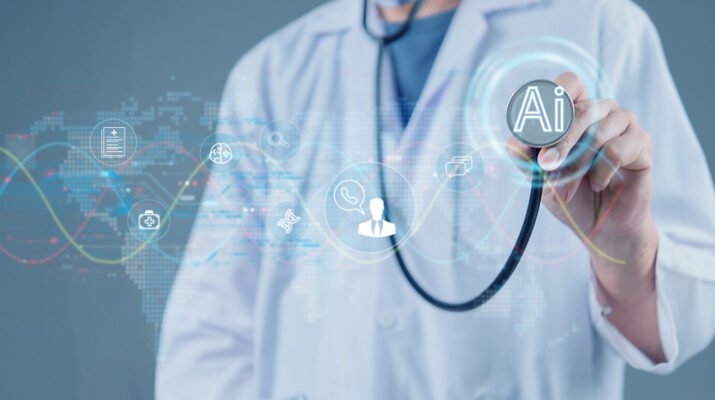
But where AI is proving greatly beneficial is in assisting healthcare providers in increasing accuracy and efficiency.
In an era where healthcare organizations have struggled with staffing, any tools to increase efficiency can help mitigate the issue.
One of the top areas where AI is making a difference is in diagnostics. Of course, AI doesn’t diagnose patients, but AI algorithms can compare images such as ultrasounds, MRIs and X-rays to historic images to discover anomalies that radiologists and other providers may miss.
AI can help reduce false positives and the unnecessary worry associated with them.
Using AI can help providers look through imaging more quickly and accurately. That can be essential in cases such as strokes where emergency care is vital for positive outcomes. Using AI can help healthcare organizations that struggle to staff radiologists. The extra help from AI may allow providers to employ fewer radiologists yet maintain the same patient load.
Healthcare has become highly individualized. A more holistic approach, personalized healthcare takes time as a provider pours over records and determines the best way to support good health for a particular patient. AI can assist providers in efficiently developing personalized care plans through analyzing the patients’ medical history and family health history and applying best practices.
Predicting patient outcomes has become an important facet of preventative healthcare. Analyzing the likelihood of certain unwanted outcomes is vital for recommending ways to prevent them. AI can help healthcare providers predict likely health outcomes for patients so they can provide guidance.
AI is useful for tracking subtle changes in health such as a slow growing tumor. Analyzing how it changes can give providers better insights as to what they should recommend as a course of treatment for patients.
Hospitals, surgical centers, doctor’s offices and urgent care centers are busy places with an ever-changing population of patients and providers. Add to that the continual changes in regulations and policies and it’s easy to see how management can struggle with efficiency. The needs and demands of the day and week change constantly. AI has proven helpful in increasing operational efficiency in areas such as staffing, care delivery, patient schedule and discharge and more by using existing data to make mundane decisions.
Electronic medical records (EMRs) have helped organize patient information, improve screening and record consistency and promoted better collaboration and access to records. But what providers have discovered is that documentation has become cumbersome, time-sucking and a source of irritation to patients who often feel their providers have their “nose stuck in a laptop” the entire visit. AI can help use natural language processing technology to convert speech to text for making documentation easier. Recording during the appointment is less intrusive than incessant typing and screen tapping and helps ensure a more accurate EMR.
It’s challenging to tell what other areas AI will affect in healthcare. Although its role is improving human accuracy and efficiency, AI cannot replace the human element in providing healthcare.