
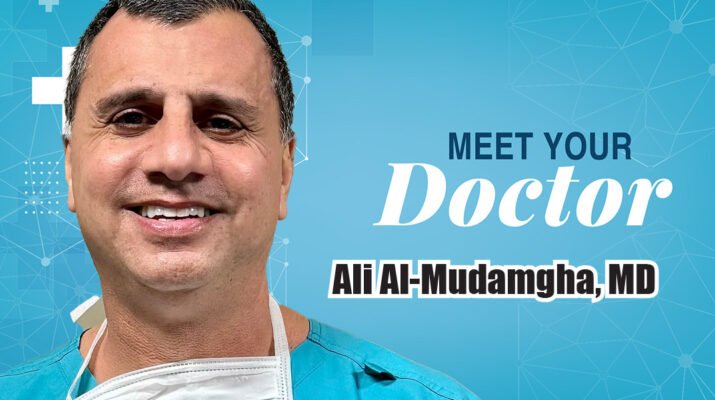
St. Joe’s cardiac electrophysiologist performs 1,000th Watchman procedure, designed to reduce stroke risk in people with atrial fibrillation
By Chris Motola
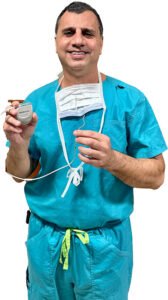 Q: You recently performed the St. Joseph’s 1,000th Watchman procedure. Can you give us breakdown of what the Watchman is?
A: Yes, so the Watchman is an implantable device that is placed into the heart permanently to help with stroke prevention in patients with atrial fibrillation, patients who cannot take a blood thinner or who don’t want to take a blood thinner.
Q: Are blood thinners considered to be a better solution in most cases?
A: No. So the way this works is if a patient has atrial fibrillation, it automatically triggers. Something called the CHA2DS2-VASc score, which is a stroke scoring system. And patients are given one to two points based on certain risk factors, like their age, if they have high blood pressure, diabetes, if they’ve had vascular disease or a heart attack, whether they’ve had a previous stroke and then also whether they’re a male or female. And in a patient that has a stroke score of three or higher, regardless if it’s a male or female, the standard of care is they have to be placed on a blood thinner to reduce their risk of a stroke from any atrial fibrillation. In those patients that have a stroke score of three or higher, if they either can’t tolerate the blood thinner, if they have a history of recurrent bleeding or anemia or in patients that just say, “Listen, I am unwilling to take the blood thinner because of my lifestyle and my personal desire.” Those patients become candidates for Watchman. When you compare a Watchman to a blood thinner, the Watchman is what we call “non-inferior,” which means they’re equivalent. There is a study that should be released sometime this spring, which is going to determine whether the Watchman is actually superior to a blood thinner. But right now we consider the two equivalent.
Q: How big is the device and where does it go?
A: It varies. There are five different sizes. They’re in millimeters, 20 to 40 millimeters in size and that’s sort of a diameter and length. And the reason they come in different sizes is because every patient is unique. The size of what we call the appendage, which is what we are occluding, varies from patient to patient as does the shape. And so, even with all the preplanning and whatnot, we don’t know what size we’re going to place until we do the procedure. We have to go through a series of tests and we say, “Oh, you know what? It’s not a good size or it’s too big or too small.” And then we have to change it right then and there during the procedure.
Q: How does the device work? How does it perform the same effective function as a blood thinner?
A: So in in the left upper chamber of the heart, you have this extra piece of tissue called the appendage. So you should think of the appendage like an appendix. It serves no purpose other than to give you trouble. And in patients that have atrial fibrillation, blood can pool in the appendage and that leads to blood clots. Those blood clots can form in the appendage and then they can break off and then cause a stroke. So, a blood thinner is designed to prevent the blood clots from forming. The Watchman seals the appendage so nothing gets in, nothing gets out and it removes that mechanical aspect if you will.
Q: Why does sealing the appendage require a device instead of a straight surgical procedure?
A: So that’s a good question. So you have to understand that you can clip the appendage and you can actually surgically suture the appendage, but that requires opening the chest. So, you have to open the chest and get to the appendage from the outside of the heart. When a cardiac surgeon does bypass surgery or does anything where they’re physically operating on the heart and a patient has a history of atrial fibrillation, they will most of times clip the appendage or cut the appendage away and sew it. Beyond being an open procedure, here are some issues with that, though. Traditionally, when you look at clipping of the appendage, up to 40% of the appendages that are clipped are not fully closed and the patient still has to be on a blood thinner. They can leave what we call a residual stump, which is still enough of the appendage where a clot can form. So this is a much less invasive procedure because it’s done through a catheter that’s placed into the large vein of the groin, as opposed to an incision and opening the chest or getting to the heart in between the ribs and whatnot. So, there are plenty of people that get their appendages closed surgically and it’s appropriate because the cardiac surgeon’s there anyway. But for the vast majority of patients, this is this is a better option because it’s so much less invasive.
Q: So this is a vestigial part of the heart that everyone has, but whether it becomes a problem depends on those other scoring factors?
A: Yes, so everybody has an appendage. So, this is how you have to view things in medicine: everybody has a risk of everything until they die. So as I am talking to you and you are talking to me, we both have a risk of stroke right now. Based on genetics and all these other factors, you would then add atrial fibrillation to the equation. That risk can go up to five times. OK, so you have to do something to bring the patient back to what we call their age predicted risk. And so that can either be done with a blood thinner or a Watchman. Everybody has an appendage, but not everybody has atrial fibrillation. And even if you do have atrial fibrillation, you could have a stroke score of zero, which means you don’t need anything. You could have a stroke score of one, which means you have the choice of an aspirin or a true blood thinner. And if you have a stroke score of two as a male, that requires a blood thinner but doesn’t get you to a Watchman. If you have a stroke score of three as a female, that gets you a blood thinner and it automatically gets you in the pool that would qualify for a Watchman.
Q: How complex a procedure is this?
A: There has been an evolution of Watchman devices. The current Watchman device is incredibly safe to deploy. I would say if you talk to most electrophysiologists, they’re going to tell you it’s a pretty straightforward, easy procedure. Now that doesn’t mean you can close everybody’s appendage, OK? Because you can’t. You can close about 98%, and the reason for that is that some patients have a very wide opening and a very shallow depth. So if it’s very wide, then the Watchman device is very deep and it sticks out too much. So those are the challenges where you just really can’t get a good seal. But it’s not because the procedure is difficult for us because like I said, we are in there all the time. I’ve done over 8,000 left atrial procedures. I would say, compared to some other procedures we do, it is far from the most difficult.
Lifelines
Name: Ali Al-Mudamgha, MD
Position: Clinical cardiac electrophysiologist at St. Joseph’s Health
Hometown: Syracuse
Education: SUNY Health Sciences Center; SUNY Upstate University Hospital
Affiliations: St. Joseph’s Health
Organizations: American College of Cardiology, Heart Rhythm Society
Family: Wife, three children
Hobbies: Golf