
By Deborah Jeanne Sergeant

Does your family tell you that you snore?
Most people don’t realize that they do and many people who have sleep apnea don’t even realize they have sleep apnea. Not all people who snore have sleep apnea, but most who have sleep apnea snore.
Sleep apnea involves short periods of time when the patient is not breathing while asleep. This disruption in breathing deprives the brain of oxygen intermittently all night and results in less-than-restful sleep.
Typically, the latter complaint is what brings patients to their healthcare provider rather than any concerns about snoring. Snoring is what compels most bedmates to encourage the patient to see a provider.
With obstructive sleep apnea, the patient has a physical issue that keeps the airway open wide enough to breathe properly. The other kind of apnea, central sleep apnea, involves a lack of communication between the central nervous system and the respiratory muscles.
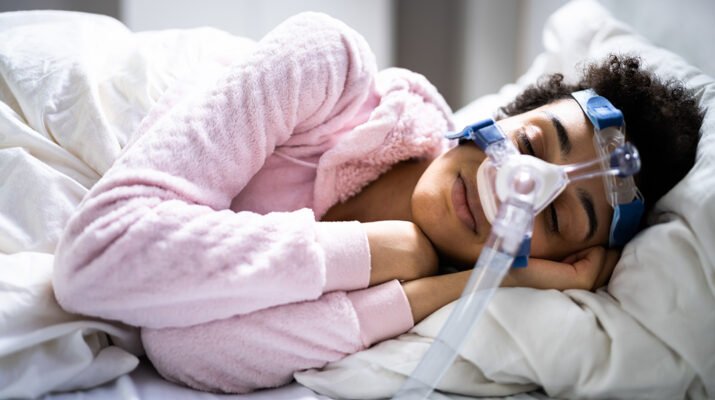
In many cases, doctors prescribe a continuous positive airway press (CPAP) machine to treat sleep apnea. But when CPAP doesn’t seem to help, they do have more ideas to try.
Christine Curtis, respiratory therapist at the Sleep Disorder Center at St. Joseph’s Health, offered a few suggestions for patients who find CPAP isn’t helping improve their sleep apnea:
• “If CPAP isn’t helping sleep apnea, you should try to identify some of the barriers you may be experiencing. Maybe you need to try a different mask, ones that are less confining such as nasal pillows, nasal cushion or a full-face mask if your current mask is leaking.
• “Use a ramp feature over 20 minutes so the pressure can start low and ramp up to the prescribed pressure.
• “Ask your provider about APAP or auto adjusting positive airway pressure. This adjusts the pressure automatically based on your breathing patterns. It may be a good idea to practice daytime desensitization by wearing CPAP while awake for short time intervals.
• “Other options may be positional therapy, which means that you avoid sleeping on your back.
• “If someone is having nasal issues, it may be a good idea to use nasal sprays, nasal strips or heated humidification to reduce dryness.
• “Some people may need weight management; even a little bit of weight loss can help treat sleep apnea.
• “If all else fails, you may benefit from advanced options such as a dental device fitted by a dentist.”
Above all, don’t feel that you must suffer with sleep apnea if CPAP is uncomfortable for you or if it does not offer you the help you need in treating sleep apnea.
“It’s essential to communicate with your healthcare provider about any discomfort or issues you’re having,” Curtis added. “No one should stop wearing CPAP without speaking to their doctor first and developing a backup plan.”
For patients with obstructive sleep apnea, hypoglossal nerve stimulation implants may be recommended.
According to the Cleveland Clinic, untreated sleep apnea raises risk for: hypertension (high blood pressure), cardiovascular disease, metabolic syndrome, diabetes, obesity and cancer.