
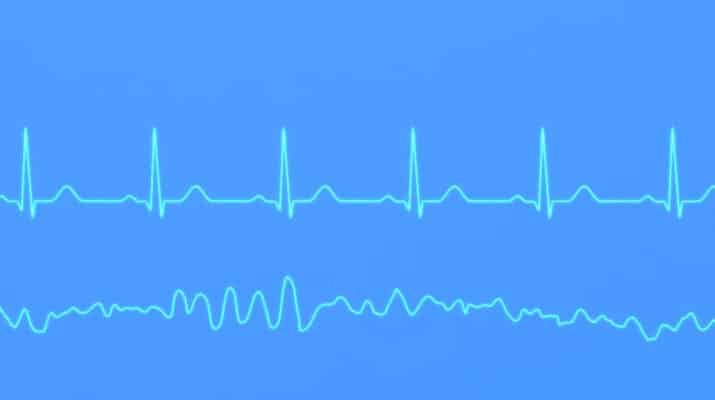
This often-fatal arrhythmia requires emergency care
By Deborah Jeanne Sergeant
As the most frequent cause of sudden cardiac death, ventricular fibrillation causes an irregular heart rhythm that can go unnoticed — unlike in movies, where heart attack patients clasp their chests and wince in pain.
“Ventricular fibrillation is more like the end result of something else happening,” said Nikhil Joshi, cardiologist with Crouse Medical Practice. “It’s describing cardiac arrest but in the bulk of cases when people have ventricular fibrillation, it’s something else causing it, like a heart attack. There are a few rare conditions that can cause ventricular fibrillation in otherwise healthy people, but it’s usually someone who has heart disease and there’s a trigger that sets them into ventricular fibrillation.”
Typically, patients experiencing ventricular defibrillation have comorbidities like unmanaged diabetes, hypertension, chronic kidney disease or lupus, as these diseases accelerate heart disease. But a young, otherwise healthy person with hypertrophic cardiac myopathy may have ventricular defibrillation.
Sometimes, when patients develop a blocked artery that leads to ventricular fibrillation, they may feel chest pain, pressure and discomfort. They may also feel short of breath and pain in the jaw or arm.
Instead of pumping blood effectively, the heart quivers. The only treatment is to quickly identify that patients are experiencing ventricular defibrillation and provide a defibrillator shock and CPR.
“The biggest thing that puts people at risk is a heart attack or significant heart disease,” Joshi said. “Maintain good heart health. There aren’t specific things to prevent ventricular fibrillation except the same as preventing heart disease.”
Alexis Quinn, public health educator with Creating Healthy Schools and Communities, part of the Onondaga County Health Department, said that unmanaged high blood pressure, high cholesterol or diabetes “can all increase your risk of ventricular fibrillation.”
“If you need medication, take it,” she said. “Know the symptoms. That’s a big part of it. A lot of people don’t know the symptoms. The biggest ones are chest pain, dizziness, irregular heart palpitations and shortness of breath. Consult with a medical professional. If they worsen, call 911.”
A stressor to the heart — like an infection — can cause ventricular fibrillation, even in a young, fit person. A sudden trauma to the heart such as a physical blow can also cause ventricular fibrillation.
“With a younger athlete, a lot of times, there’s no underlying comorbidity,” said David Bass, cardiologist with Oswego Health. “Certain causes of ventricular fibrillation in otherwise young healthy people can’t be detected by periodic assessment. I’d advise any young person who’s about to compete in competitive sports of any kind, talk with your pediatrician or family practice provider to make sure they know you’re going to compete on this level so they can examine you and if there’s any concern, they can seek an expert consultation about any concern about these rare conditions.”
The outcome for someone receiving resuscitation early, followed by the right care, is “an amazing prognosis,” Bass said. “Someone with ventricular fibrillation as a manifestation of end stage disease in the hospital has a worse prognosis.”
Some patients surviving ventricular fibrillation may receive an implantable defibrillator in case they have another episode. It won’t prevent another ventricular fibrillation, but Bass said it provides a shock to bring the patient back.
To save more lives during heart incidences, more people need to learn CPR and how to use defibrillators. Maintaining the devices in more areas is challenging because they’re expensive, each unit costing several thousand dollars. They must be maintained to remain effective.
Everyone should review family health history for any genetic conditions that can lead to ventricular fibrillation, such as a relative who experienced cardiac arrest or ventricular fibrillation and discuss this family history with a healthcare provider who can make personalized recommendations for improving overall heart health.