
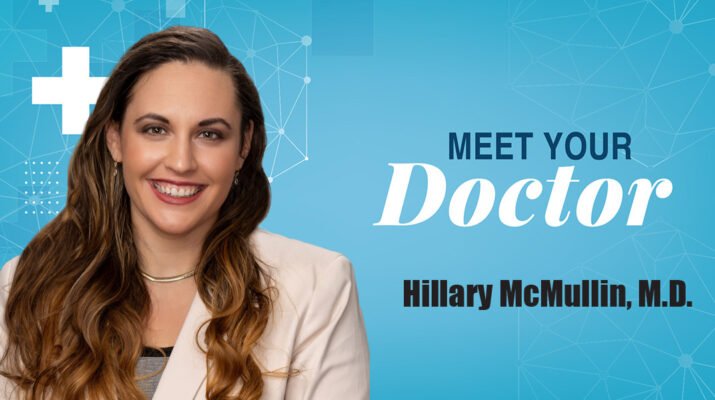
General surgeon at Crouse promotes a multi-disciplinary approach toward women’s health
By Chris Motola
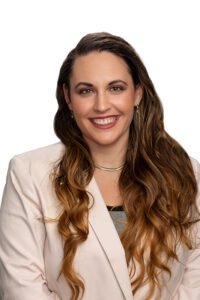 Q: You are working with the Women’s Health Institute at Crouse Hospital, which promotes a multi-disciplinary approach toward women’s health. How does that impact your specialty, general surgery?
A: It is kind of a newer thing that we’re trying to get off the ground at Crouse to promote better understanding and care for medical problems and surgical problems that affect women. This is something that I have to deal with on a daily basis in my capacity as a surgeon. I treat both men and women, but I do quite a bit of hernia surgery on women. I don’t know if you know this but very frequently because inguinal-groin hernias are more common in men, they can be easily overlooked in women. So I’ve seen a lot of women who have had chronic issues because their problems have just been overlooked. And as a woman myself, I find that I’m able to relate better to patients and, you know, really help them in that way. I also do breast surgery and that is usually where we have more of a multidisciplinary team to help patients.
Q: So how do inguinal hernias show up differently in women symptomatically?
A: So symptoms can be similar, but frequently they’ll get a different type of hernia in the groin that can be missed, because it’s not as easy to identify. And so people will tell them they just have a muscle strain or something like that. In addition, I have been working a little bit more trying to get patients into physical therapy and things like that to help with abdominal wall strength and things of that nature after surgery.
Q: Do you find this fits more into a functional medicine approach, this kind of multi-disciplinary approach or is that kind of like a buzzword?
A: Yeah, I mean, I always try to focus on functional aspects of medicine. You know, it brings to mind a patient that I saw recently who came in with a ventral wall abdominal hernia and she had really not wanted to undergo surgery and had seen a surgeon at another hospital that told her that surgery would be very involved, very complex, she would probably need a big, open repair. She was really not excited for that, but she was told that she needed to have the surgery. And when I questioned her a little bit more, she said, no, I’m not having any pain, I’m not having any symptoms from it, but I was told that I needed the surgery. And so I really do try to focus more on what is the patient’s priority. Is the surgery that I’m going to offer them worse than the medical problem that they have to begin with? And how is it going to affect them functionally moving forward? So that’s something that I always try to keep in mind for all of my patients.
Q: Are you performing robotic surgeries mainly at this point?
A: I do mostly robotic surgery, but I also do open surgery. It really depends on the patient and their specific issue.
Q: I noticed your undergraduate degree is in neuroscience. Does that inform your practice in some way?
A: Not really, honestly, which is the short answer. I still find neuroscience and the neurotransmitters and the anatomy of that to be fascinating, but when I was in medical school deciding what I wanted to do as a specialty, I was sort of disappointed by how little we know about the nervous system in general and how few treatments we have. I really wanted to do something where I could help patients pretty immediately. Neurological conditions do not usually fall in that category. I moved away from that and I’m happy that I have because, like I said, I really enjoy getting to help people with more immediate issues.
Q: And as far as the outcomes of general surgeries and whatnot, how much opportunity do you have to see how the patient is doing down the road, following up with them, or even just kind of getting a sense of the impact you’ve had?
A: That’s a great question. You know, I think that that is something that’s sort of underappreciated in general training because you don’t really have that continuity with patients after you operate on them. And that has been one of my favorite parts as an attending surgeon, to see people in my office afterward. I get to ask them questions. Are you happy with surgery? Would you have done this again if you could go back? Would you do it the same way? Would you do something different? And overwhelmingly, people have been very happy with the care that I’ve offered. I really try to make an effort to see most of my own patients, even for sometimes as long as months after surgery, to follow them and see how they’re doing. It’s been really rewarding to see how people recover and how people have experienced their surgery and their surgical team and things like that. Not just the surgery I perform, but how the teams at Crouse have functioned at each stage.
Q: When it comes to a specialty like general surgery, which is offered at hospitals of all sizes, what does a larger, urban hospital like Crouse offer that a smaller rural one may not?
A: I think that every type of hospital has its own value. Certainly, critical access rural hospitals are very important for patients to have an introduction into the health system. But I really enjoy being at a larger but still community hospital. For the reason that we have more to offer people; I have access to better technology, I have access to better systems, I have access to more colleagues than I would have at a rural or critical access hospital. I think that really makes all the difference. The other component of that is, I’ve got multiple partners I can turn to if there’s a complicated case. And not just partners of my own specialty, but I’ve been able to do joint cases with OB-GYNs, joint cases with the colorectal surgeons for when there is something that would benefit from the knowledge of different types of surgeons. So it’s nice to be able to be in a setting where we do get to work in a more collaborative way and we have access to their tools to help patients.
Lifelines
Name: Hillary McMullin, M.D.
Position: General surgeon at Crouse Hospital
Hometown: Palmyra
Education: Bachelor’s degree in neuroscience, University of Rochester; medical degree (M.D.), University of South Florida; residency: general surgery, University of Rochester Medical Center
Affiliations: Crouse Hospital
Family: Wife (Angelina Schwartz, M.D., another general surgeon at Crouse)
Hobbies: Reading, playing with dogs, kayaking