
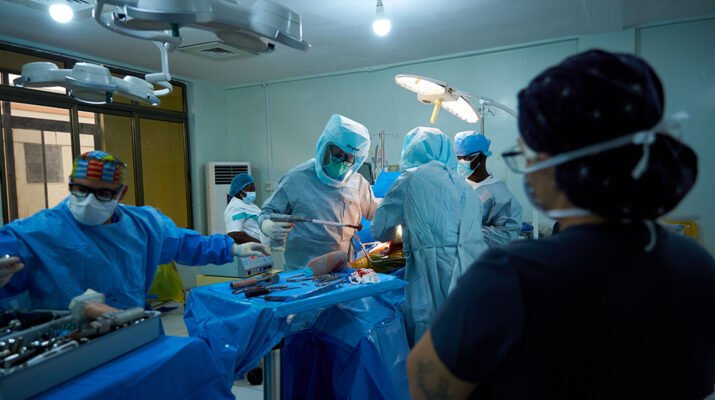
Team of orthopedic surgeons and other providers, mostly from SOS in Syracuse, spends nine days in Ghana on a volunteer mission. Balance: 115 hip and knee replacements done
By Mary Beth Roach
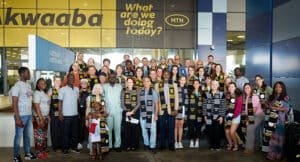 Operation Walk New York’s medical missions abroad, the most recent one being to West Africa this past October, have had a significant impact not only on the patients who receive treatment but on the team of medical personnel as well.
The local chapter is one of 13 that make up the Operation Walk organization and it provides free surgical treatments to patients suffering from incapacitating bone and joint conditions in developing countries.
The Central New York branch — OpWalk NY, for short — was established in 2010 by physicians Seth and Brett Greenky, from Syracuse Orthopedic Specialists and Kim Murray, a registered nurse, chief clinical officer at SOS, who were all looking for a volunteer effort that aligned with their skill sets. Murray now serves as director of OpWalk NY.
 This last trip was the OpWalk NY’s sixth to Ghana. Teams have also traveled to Guatemala, Panama and Nepal.
On this particular visit to Koforidua, Ghana, the 48-person team completed a record number of 115 hip and knee replacements in just four days, working in shifts from dawn to dusk. OpWalk NY has done 887 in total since its formation.
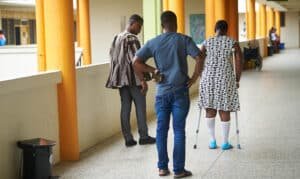
“That the medical personnel can meet patients one day, and a few days later they’re “walking on their own, without pain and without mobility limitations is by far the most rewarding thing, knowing that we have transformed somebody’s lives,” said Murray, who has become a logistical expert, handling a myriad details preparing in advance of the trip.
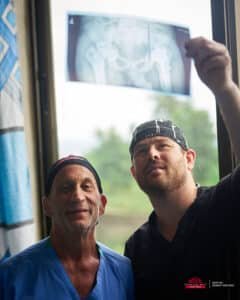 Leading the trip in October were physicians Seth, his brother Brett and his son Max Greenky. For Seth Greenky, the trip “resets your expectations and makes you realize how good that we have it here.”
The number of replacements done by OpWalk NY during this recent trip, Greenky said, was the most done by any of the organization’s chapters. There are hundreds, if not thousands more, still in need, he added.
“I think we all struggle with that when we leave,” he said.
Underscoring that need, patients will sometimes travel up to 24 hours to Koforidua for these procedures, Greenky said.
While joint replacements here in the United States are most often performed on individuals in their 60s, Greenky said that the average age of a patient in Ghana is in their 20s.
Sickle cell anemia, he explained, is prevalent in West Africa and one of the side effects is that they lose the blood supply for their hips at an early age, especially when the disease is untreated.
As Murray noted, some of them are wheelchair bound; many of them have dropped out of school or can’t hold jobs. These surgeries eliminate the pain and allow them to function.
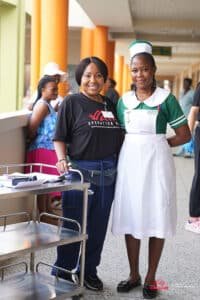 Long before the OpWalk NY team landed in Ghana, months of prep work had to be done on various fronts.
The first step in a mission trip is fundraising. For this visit, about $250,000 had to be raised through Operation Walk’s local chapter. This is very most challenging but they have some very loyal donors and volunteers, Murray said.
When she is unable to get a lot of the necessary items donated, she goes through the process of filling out grant applications to the implant companies.
Medical supplies, whether donated or purchased, include bandages, prosthetics, gauze, surgical supplies, instrument trays, surgical packs, medications, walkers and crutches and they are all packed up on a 40-foot shipping container which, for this trip, was sent out in August. In the return trip, the team needs to ship back, among other materials, implants they didn’t use and their machines. The round-trip cost for that shipping can run between $60,000 to $80,000, Murray said.
A volunteer team of personnel are pulled together, including whole surgical teams, including surgeons; anesthesiologists; operating room nurses; people responsible for sterilizing the instruments; floor nurses; physical therapists and general volunteers.
On this trip, there were about six people from SOS, and some came from the Saratoga-Albany region, as well as other locales, Murray said. They take personal or vacation time to take the trip; are required to make a donation and provide their own transportation to JFK Airport, from which they depart for Accra, Ghana’s capital.
 An early step in the prep is to also get in contact with the physicians in Ghana. Due to the number of trips that OpWalk NY has made to this country, they have developed a rapport with St. Joseph’s Hospital and the Catholic Church there. The medical personnel there will identify and screen patients; come up a patient list and share X-rays, medical histories and backgrounds with the Syracuse team, who then determines which patients have conditions that can be treated with the equipment and implants they can bring and who are stable for surgery, Murray said. From there, the team here comes up with a list of patients they will screen once they’re in Ghana.
Meanwhile, Murray is handling the more bureaucratic details, arranging the proper visas and licenses for the volunteer staff and hotel accommodations, coordinating the three-hour transport from and back to the airport in Accra to Koforidua and then transportation between the hotel and the hospital.
All the medical missions, Murray said, are nine days and follow the same timeline. They flew out on a Thursday, arrived on a Friday, checked into the hotel and started some prep work. On Saturday, there was an all-day screening clinic where they evaluated all of the people that they had in the queue to determine who’s going to move forward with surgery. The other half of the team set up the field hospital and unpack all the cargo from that 40-foot container.
For the next four days, Sunday through Wednesday, surgeries were done in four operating rooms from sunup to sundown and sometimes later. These procedures are also educational exercises for the doctors from Ghana and they scrubbed in.
On Thursday, the team was back at the hospital packing, doing post-op work, checking in on patients, doing some education and working with the Ghana team, who will continue to follow up after the U.S. team departs.
Once back home, the Operation Walk team continues to check up with the physical therapists and orthopedists in Ghana via email, Facebook and other social media.
And with 11th mission trip for OpWalk NY completed, hundreds of people are now able to live without pain.