
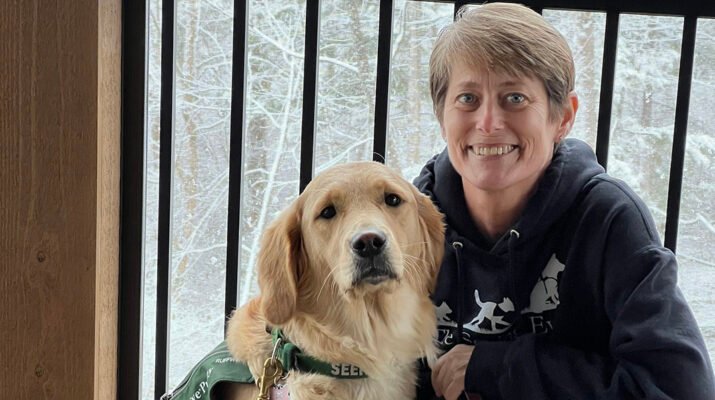
Area volunteers with groups like The Seeing Eye train puppies, preparing them for their vital role in assisting the blind
By Deborah Jeanne Sergeant
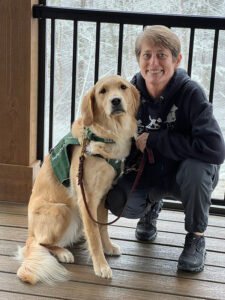
Guide dogs begin their lives like any other dog.
But organizations like Guiding Eyes for the Blind in Yorktown Heights provide special training so the dogs in their program can help people with visual impairment better navigate with confidence.
Before the dogs can participate in the training program, they need to be fully grown and have some basic manners. Instead of kenneling the dogs, placing them with a family for puppy raising will help the animals become better socialized. That’s where puppy raisers come in.
Camillus resident Carrie Widor volunteers for The Seeing Eye as puppy raiser. Most recently, she finished her time with Tracey, a golden retriever and Widor’s 16th puppy. Tracey returned to The Seeing Eye March 16.
Widor became interested in raising puppies as she used to live near the organization’s headquarters in Morristown, New Jersey.
“I used to see them out working with the dogs and the graduates working with their dogs,” Widor said. “I grew up with dogs and started to volunteer walking their dogs that were no longer in the program.”
While volunteering as a walker, Widor learned about puppy raising and wanted to get involved more with the mission of The Seeing Eye. In August 2004, she received her first puppy.
“I really enjoy seeing the progression as we get them at seven weeks,” Widor said.
The dogs learn basic obedience, socialization and exposure to a variety of environments. Puppy raisers keep the dogs for 14 to 16 months before The Seeing Eye recalls the dogs for evaluation to become trained as a guide dog. Those that enter the program and pass the training are ultimately matched with a person to guide.
“A lot of things we focus on that could be a distraction for the dog,” Widor said. “If it’s squirrels, other people or other dogs, we work on that quite a bit while raising the puppies. You need to proactively train that as an act of disobedience so they’re willing to listen to commands and respond in a way that’s engaging and rewarding for the dog as well.”
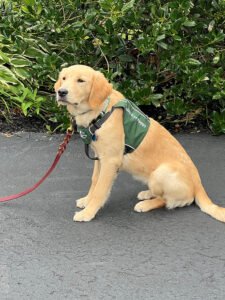
But life as a guide dog or a potential guide dog is not all work and no fun. When the dog is not in harness, they relax and play like any other dog.
The Seeing Eye tends to use German shepherds, Labrador retrievers and golden retrievers. They select these breeds for intelligence and willingness to work.
“They know how to confidently lead someone and make the right decisions to get through or over an obstacle,” Widor said. “It’s just an important part of the program.”
The organization covers the cost of all vet bills, dog food and equipment.
Per the agency’s protocols, dogs in the program learn basics from their puppy raisers like foundational commands, home rules like staying off furniture and not stealing shoes and public behavior like walking well on a leash. They also experience exposure to many different venues.
ADA law does not cover guide-dogs-in-training, so it is up to business owners and management where these dogs are permitted.
“In general, my experience with bringing our puppies into public places I think in general it has been very positive,” Widor said. “Most people are willing to let us in. They are welcoming us into stores. I haven’t had any trouble in gaining access.”
Two of her 16 puppies were accepted as guide dogs. Two had medical issues that prevented them from becoming guide dogs and one for lack of confidence.
Puppies that don’t qualify are always first offered to their puppy raising family and if that won’t work out, the dogs are placed with a different family or moved to a different “dog career” such as therapy dog or police dog if applicable.
“There’s a long waiting list to adopt these dogs and they’re well cared-for and go to good homes,” Widor said. “We call them ‘career change’ dogs.”
Whether the puppies are going to training or to a different home, “it’s hard to let go; we get attached,” Widor said. “They’re with you 24/7 for so long. Ultimately, they’re integrated into your family dynamics, but it’s so rewarding to see the profession and see them go to the training and be matched and working with someone to give them their independence. It’s extraordinary.”
If you’d like to help but do not feel sure you’re up for a 14- to 16-month commitment, agencies also seek volunteers to help for short-term assignments. Lorin Bruzzese, puppy program manager with Guide Dog Foundation for the Blind in Smithtown calls it a “fostering program” so that their puppy raisers can have a break for travel or illness. The organization has local puppy raisers in Rochester and Moravia.
“It can also make sure that the puppy is comfortable with transition,” Bruzzese said.
Typically lasting up to two weeks, puppy fostering involves the same provisions as puppy raising with the agency covering the cost of vet care and supplies as well as providing training.
“It’s a good way to introduce people to the curriculum if they’re interested in puppy raising,” Bruzzese said. “It shows them what it’s like to work with a puppy in your home.”
As with puppy raisers, it’s OK to have other pets in the home. The agency also does not require a fenced backyard and works with volunteers to find places where they can play off leash.
“When we have people employed full-time, we make sure they have approval to bring the puppy to the workplace,” Bruzzese said. “Four hours is the maximum time the puppy is in the crate during daytime hours.”
Dog crating can provide a low-stress place for dogs to relax while protecting belongings from the puppy’s urge to chew.
“We give a goal of five socialization opportunities a week with a variety of exposure,” Bruzzese said. “It’s for mental development and confidence.”
She encourages anyone interested in volunteering to request information.