
By Mary Beth Roach
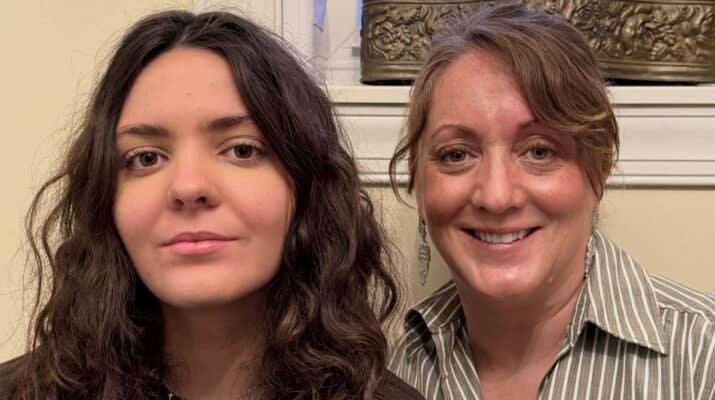
When Carly Mayenzet began the Once Upon A Lyme nonprofit about 18 months ago, the aim was to advocate and bring awareness, to strengthen the knowledge around Lyme disease in children and to develop a strong support system for other families dealing with the disease.
Mayenzet and her husband, Brian, bring a lot of first-hand knowledge to that mission.
The Cato couple spent months filled with endless doctors’ visits, tests, sleepless nights and overriding fear and concern as their daughter, Addison, now 15, experienced physical and emotional pain for which no cause could be found.
The ordeal for the Mayenzets began in the winter of 2022.
In November 2021, Addison, then 11, was performing in a school play and as Carly said, “life was good.”
And then it wasn’t.
By January 2022, Addison had developed a fever and was nauseous, followed by a sinus infection, the latter of which was treated. But by February, she was experiencing stomach aches, fatigue, dizziness, body aches and, as Carly explained, “all wrapped in a heavy blanket of anxiety, fear and panic.”
The anxiety became worse. Eventually, Addison stopped going to school and became isolated in the house. Online tutoring helped, but sometimes it was difficult to get her through it, Carly said.
There were visits to the pediatrician, a mental health provider, a gastrologist and a urologist. Blood and urine samples were taken. Kidney sonograms and MRIs were conducted. Results indicated that everything was normal.
A basic Lyme test was also given and came back negative.
Then, in May 2022, Carly saw a segment on Lyme disease on a local TV news program. About the same time, Carly’s brother suggested it might be Lyme. He had a friend with similar symptoms, who was originally misdiagnosed as bipolar, but it was later determined to be Lyme.
The Mayenzets found what Carly called a “Lyme-literate doctor” and they spent three hours reviewing her history and symptoms and 15 vials of blood were taken to rule out other issues.
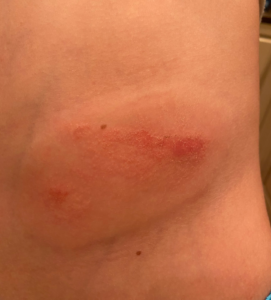
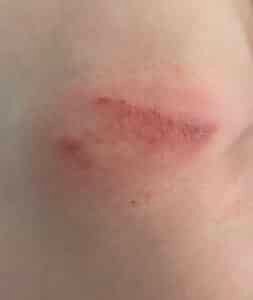
Carly said she had recalled that Addison had had a rash when she was 7. It had been in the middle of the summer and the family had been outdoors regularly. She still had a picture on her phone. She described it as a solid, oval-shaped, purple-red mark. And although it wasn’t bothering Addison, Carly had put an anti-itch allergy cream on it, to no avail. Her pediatrician gave her a prescription cream. It eventually faded, but Carly wasn’t sure if that was due to the cream or just time. Addison’s Lyme doctor believes that that’s when it probably started.
As Carly told a CNY Lyme Alliance Summit in 2024, “Nobody wants to hear that your child has a disease. But it did give us some relief. A name was given to her suffering, Lyme disease. Therefore, a treatment plan existed. Antibiotics and various supplements were prescribed for several months at a time for the three-year period.
Today, Addison is in her freshman year at Cato-Meridian Junior-Senior High School and plays volleyball. She still has fatigue and, as Carly said, she needs to budget her energy and she’s eating clean and healthy.
According to the New York State Department of Health, a total of 18,704 confirmed or probable cases of Lyme disease were reported in 2024 in the state, excluding NYC. Between 2020 and 2024, in the state, excluding NYC, the incidence of Lyme disease has increased from 37.2 to 164.8 cases per 100,000 residents.
Yet, it can often be misdiagnosed.
Lyme disease has been called the “Great Imitator for its ability to mimic other diseases,” according to a report published by the Columbia University’s Irving Medical Center.
The report also mentioned that symptoms may appear rapidly or the bacterium can lay dormant for months or even years. Furthermore, blood work may not be reliable in early stages.
As Addison continues to heal, Carly looks back over their journey. She said they were fortunate in that both her parents and Brian’s were close by and could help out when needed, especially with their son, Ayden, who was 13 at the onset of Addison’s symptoms. He’s now a senior at Cato-Meridian.
That support, Carly knows, is critical and she wants the Once Upon a Lyme organization to provide that help to families now enduring what her family went through.
The group is focused on pediatric Lyme and helps to raise awareness among the community, pediatricians and educators.
As a former elementary teacher for 18 years, she believes that making educators more familiar with symptoms would be helpful. She would also like to see screening become part of routine wellness visits.
The organization is also in the early stages of creating child-friendly tick kits, which may include magnify glasses, tweezers, bandages, alcohol wipes, bravery cards and stickers, removal directions and simple infographics. These would serve multiple purposes — prevention, knowledg and education and a sense of comfort and independence regarding tick checks, she pointed out. The care packages are also in preliminary stages and would be tailored by age group and “contain items that bring a sense of comfort and hope to children diagnosed with Lyme disease or a tick-borne illness,” she explained.
“It was kind of a silver lining. Now we’ve kind of come through the other side, what can we do from our experiences to help other people?” she said.
Anyone interested in learning more about the organization or donating can visit the website: Onceuponalyme.org.