
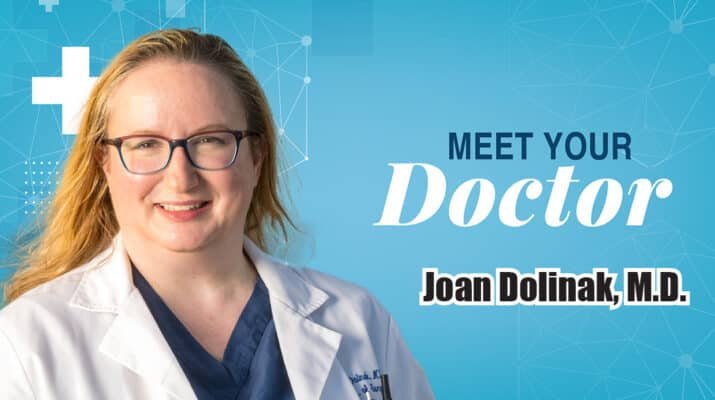
Burn surgeon at Upstate University Hospital—one of only about 300 in the country—discusses how technology has improved burn care. The center treats about 1,500 patients a year, including children
By Chris Motola
Q: I’ve been doing this for a while and I think you’re my first burn surgeon.
A: There are only about 300 of us in the country. I’ve been doing it for around 13 years.
Q: Is there just not that much need for burn surgeons? Or is it a difficult path to get there?
A: It’s an unusual pathway. Many go through general surgery and then have additional training in trauma, critical care and then burns. There is also a number that go through plastic surgery. So, it’s kind of a meandering way to get to it. There is no set way and each of us have strengths in our approaches to burns. We try and get a good variety of practitioners at burn centers so that we are best able to address the burn patient because they are unique in how they present and the injuries associated with it, and the reconstructions that are used to get patients back to being whole.
Q: What separates burn surgery from reconstructive plastic surgery for burn victims? How much do they overlap?
A: The initial burn is more resuscitation critical care and kind of a traumatic approach. Once we get to a point where the burn is off then we start the initial reconstruction. The burn is essentially dead tissue and creates this massive inflammatory cascade, which makes it kind of complicated from a physiologic standpoint. There is a bodily reaction to it that causes hypermetabolism. And we have these giant wounds that essentially leak, so we have a lot of electrolyte losses, protein losses. So, we have to put our critical care hats on to get the patient to survive. We get the grafts on, which are essentially skin taken from other areas that are not burned, and we create what we call autografts or split-thickness skin grafts to cover that area. We have some technology to make things a little bit better nowadays compared to when I trained, just 13 years ago. Once we get patients healed, then there sometimes is additional reconstruction that needs to be done to make any scars more acceptable to the patient and the patient more functional and happier in their body.
Q: Do you actually remove the burn itself? Is that how you stop that inflammatory process you mentioned?
A: It’s essentially dead tissue, proteins and fat and muscle tissue, that is just literally still on you. If it’s a large enough burn, it does cause a massive inflammatory cascade. It can affect patients’ hearts, it can affect patients’ kidneys, it can affect their lungs. Essentially any existing medical problem that they have gets worse due to the burn. But it’s not like a linear thing where there is dead tissue on one side and then there is healthy tissue on the other, there is a spectrum. They say it’s kind of like a penumbra where some tissue survives, some doesn’t. And there are a lot of toxins in it. And you’re circulating those toxins around in your body until we can get it off.
Q: So, it’s almost like necrotized tissue?
A: Part of it is dead. And part of it is near dead. And then there’s part of it that isn’t as inflammatory. So, the goal is to try and save as much tissue as we can but get the dead tissue off.
Q: What do the grafts do? Do they effectively take the place of the old tissue?
A: The grafts are essentially a very thin cover. They’re generally a small level. When we’re dealing with the skin, we’re talking about the epidermis and the dermis. So, grafts from the patient’s own skin are taking a little bit of the epidermis off and a very small amount of the dermis so that there are cells that can grow. The epidermis is the very top layer. It doesn’t have cells that will grow. If we just did epidermal grafts, they wouldn’t be all that great. They have to have that dermal element to them. So, we take that and we will either mesh it or expand it. Sometimes for the face and the hands, we’ll do no meshing whatsoever. We’ll do what we call sheet grafting. And then we also have this technology that came to us from Australia, where we are able to dissolve part of this and create a spray. We’re able to essentially spray skin to cover a wider area using a smaller amount of donor skin. So, they don’t wind up with larger areas of open skin, because every time we create an autograft, we have to take it from somewhere. So, we use less of the patient’s own skin so that they’re able to keep more of their own.
Q: What is the prognosis like for burn victims now, in terms of quality of life survivability, all that?
A: It depends on the depth of the burn, on the age of the patient and the health of the patient as well. But survivability has improved over the past 20 years as we’ve refined our abilities to do more precise surgeries and resuscitations. So, we expect there to be more improvements in the next 10 years or so.
Q: How did you wind up in burn surgery?
A: When I was in medical school, I loved the whole family practice model and I really thought about doing family practice when I did surgery. I kind of love the hands-on feeling of being in the OR and fixing patients’ problems with my hands. Then I really discovered I love trauma and critical care. And we had an episode in Ohio where I went to medical school where we had a large mass casualty that was both trauma and burns and that got me thinking a little bit more about burns. That kind of combination really kind of drove my inspiration.
Q: How many burn patients do you typically see in the burn center?
A: We have around 250 to 300 admitted every year. We also have a number of outpatients that we see. We see about 1,200 to 1,300 outpatient visits a year.
Q: What are the most common causes of third-degree burns in your patient population?
A: We see a lot of house fires, unfortunately. We see a lot of smoking on oxygen and we also see a lot of gas-associated injuries. People don’t realize if you can smell gas, you are probably within the area that, if you light something up, it reaches you, especially if you’re downwind. It’s the gaseous form that is actually very flammable. So, a lot of people get burned while burning brush. Unfortunately, we also see a number of scald burns, ramen noodles that are heated in the microwave, kids grabbing it not quite realizing just how hot it is. So, we see a number of food-related injuries in kiddos as well.
Lifelines
Name: Joan Dolinak, M.D.
Position: Medical director of Clark Burn Center at Upstate University Hospital
Hometown: Columbia Station, Ohio
Education: Medical school: Northeastern Ohio Medical University; residency: Akron General Medical Center, general surgery; fellowships: University of Pittsburgh, surgical critical care/trauma; Vanderbilt University, burn surgery
Affiliations: SUNY Upstate University Hospital
Organizations: American Burn Association, Association of Women Surgeons, Society of Critical Care Medicine
Hobbies: Walking in nature with her black Lab, knitting, indoor plants.