
By Deborah Jeanne Sergeant
Despite rising inflation and lack of health insurance coverage for the care, more people are seeking integrative and functional medicine in the US which is projected to grow from $28.65 billion in 2023 to $229.12 by 2033.
The reasons for the growth include a lack of answers from Western medicine.
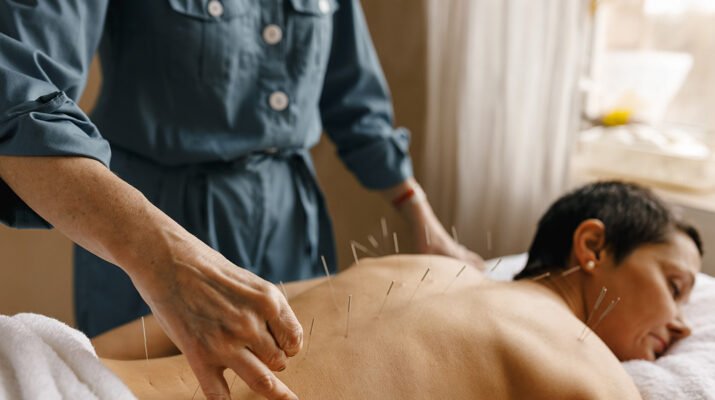
Physician Rui Wang, licensed acupuncturist, has practiced alternative medicine for 30 years and owns Acupuncture Center USA locations in Syracuse, Rochester, Binghamton and Albany. Her practice includes modalities like acupressure, natural diet, traditional Chinese medicine and exercise regimens.
“We have a lot of referrals, more and more from doctors in oncology, primary care providers, pediatrics and more,” Wang said. “A lot of times, they’re limited. Chemo and radiation help people with the cancer, but they don’t have the quality of life.”
She added that oftentimes alternative medicine can help patients mitigate the side effects and improve their quality and length of life after treating cancer.
Pain management is another example of a symptom that can at times be poorly controlled with Western medicine. Acupuncture and other modalities can benefit patients without the risk of prescription side effects by reducing inflammation and promoting circulation.
“Patients have tried everything else, like surgery, medication and nerve blocks,” Wang said. “It doesn’t work in some cases. We offer all kinds of alternatives to help the patient. Medical care has only two options: medicine and surgery. If medicine works, they get better. If not, they offer surgery.”
Wang also sees cases of allergies, sinus problems, migraine, insomnia, depression, anxiety and neuropathy, which can be challenging to treat with Western medicine. More than 500 doctors refer patients to her. She has also been asked to open a drug rehabilitation program but needs to hire more help to see that happen.
Physician Az Tahir sees patients in Syracuse and Rochester and also receives many referred patients who have not experienced the outcomes they want from Western medicine alone.
“We have results for them,” Tahir said. “The doctors themselves are meeting with us for their own health. This is functional medicine.”
He noted that local hospitals are leaning into the integrative model, typically starting in oncology where studies have proven the benefits of using a holistic, patience-centered model of care for the best results.
“This is a big trend,” Tahir said. “The benefit is quite large and risk is very, very little. The Western medicine is mostly based on the medications. Every medication has a side effect, even Tylenol.”
Tahir noted that Western medicine does not pay as much attention to nutrition as alternative medicine.
According to Nutritional Sciences, a 2023 survey revealed that about 58% of medical students did not receive formal nutrition education and the students who did averaged about three hours annually. Just 7.8% received 20-plus hours of nutrition education. By contrast, the US Committee on Nutrition in Medical Education set a goal of 25 total hours of nutrition education for medical students, which still is far fewer than a bachelor’s degree trained dietitian.
“We treat with the food,” Tahir said. “I know more than 100 foods for conditions. Then we add supplements and healing exercise that Western doctors don’t give. They can include breathing exercises, vagus nerve exercise and yoga.”
Tahir views integrative healthcare as more comprehensive than Western medicine alone, especially since the former allows for more time for providers to listen to patients. Electronic medical records and the financial constraints placed upon providers of Western medicine have necessitated truncated visits. While more efficient, these interactions restrict providers from obtaining the whole picture, according to Tahir.
“They don’t have time and cannot listen to you,” Tahir said. “The basis of Western medicine says to listen to the patient and he’ll tell you the diagnosis. That is completely gone. Now nobody listens to the patients. It’s more and more the computer and testing, as it’s expensive. At my practice, we spend half an hour to an hour just listening to the patient.”