
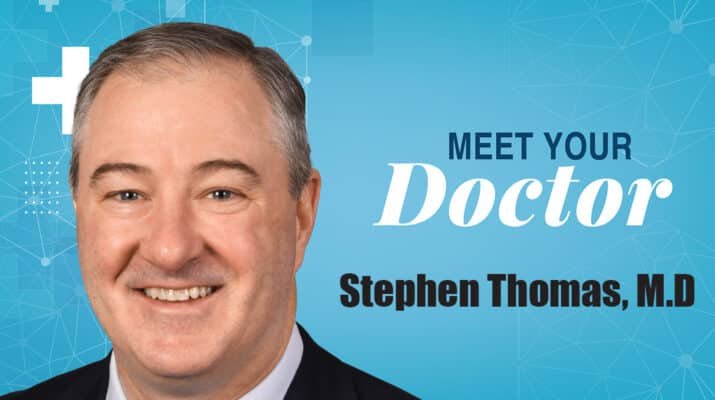
SUNY Upstate physician discusses the work of the Global Health Institute and how it’s helping advance research on infectious diseases and vaccines
By Chris Motola
 Q: You are part of a lot of research on infectious diseases and vaccines. What are you working on that you are able to talk about?
A: We’re called the Global Health Institute and we are 100% part of SUNY Upstate Medical University. We do clinical research and education. On the research side, we work on a lot of infectious diseases. But we have supported cardiology research, stroke research, addiction research. And we look at things like vaccines, drugs, preformed antibodies and we help companies who are trying to make diagnostic tests as well. We do a lot of work with vaccines at different stages of development. We try to preferentially work on things that impact our community and the people in our community. So, we work on influenza, we work on COVID-19, we work on RSV, we work on Lyme disease. Our biggest project right now is research on a diarrheal disease caused by C. diff, Clostridium difficile.
Q: Give us a rundown on what C. diff is. I’m not sure the average person is aware of it. And on your research.
A: It’s a bacteria. The people most at risk of getting sick from it have frequent touch points with health care. Older folks with medical preexisting medical conditions are also at risk. The numbers in the US are pretty significant, like half a million infections every year and anywhere from 30,000 to 45,000 people die every year of this. If you are practicing in Central New York, you will see a lot of patients who are made sick by C. diff and up to a third of people who are initially treated will have a recurrence. It can get so bad that people can require surgery and need major sections of their colon removed. It can require them to have very prolonged treatments with antibiotics.
So, we are participating in the big global phase of a Pfizer vaccine trial. This is sort of like the last trial to collect the data that is needed to go to the FDA. They’ve done previous large-scale trials. The last trial they did was about 17,000 people, and the vaccine demonstrated a clinical benefit, with the greatest benefit seen in older adults, 65 years or older, which is where this current trial is focused. So, we’re trying to get the word out that this vaccine trial is available. We’re casting a very wide net, so you should call us if you have any questions about the disease or the trial.
Q: COVID-19 responses proved to be politically controversial, which is not ideal from a medical perspective. What kinds of lessons can we take away from that era with regard to infectious disease control and research?
A: I think most of it falls into the bucket of effective communication. It is a skill to be able to communicate highly complex, scientific and medical information to a very diverse population with varying levels of sophistication regarding science and medicine and disease and things of that nature. And I think that at least, at least nationally, we didn’t do as good a job as we needed to do to make the information accessible so that people could hear it, understand it and to appreciate how it should inform their personal decisions. I also think we didn’t do a great job of managing expectations. Communication was centralized at the national level for way too long. When messages are coming directly from the White House and central officials, I think that what ends up happening is that you have states, counties and local clinicians having to respond to messages coming from a central source. It’s a lot of opinion and you may not share that opinion. It’s just also not how we live our lives and build our circles of trust, right? You trust your local scientific and medical leaders because you know they share the community with you. They’re your neighbors, your friends and they’re your colleagues. I will say that in Onondaga County, I think we were good at saying “This is what we know. This is what we don’t know. This is our plan based upon what we know. And if we have to modify it, we will.” So, I feel like locally we did OK, but nationally that was that was a problem.
Q: On Lyme, I believe we had a vaccine at one point, but it was taken off the market. I hear there’s a new one coming?
A: You’re right. Lyme disease is transmitted when an infected tick feeds on a person. The bacteria gets into the person and in a percentage of people, it can make them sick. Most people recover and are fine, but in a subgroup of people, it can make them very, very sick, and it can impact different organ systems. So, it can give people inflammation of the spinal cord or the brain. In some people, it can mess up the electrical system of the heart. Some people develop what’s sometimes called chronic Lyme disease, but I don’t like that term. But basically they go on to have very long-term manifestations of disease. They can have fatigue, pain syndromes of their muscles or bones or brain fog.
GSK [GlaxoSmithKline] had a vaccine in the late ‘90s called LYMERix. It was actually determined to be safe and effective. If I recall correctly, it reduced your risk of developing Lyme disease by more than 75%, but it was pulled off the market pretty soon after it was launched due to bad press. It was called the “yuppie vaccine” for people who can afford to go on vacation to Cape Cod. There was some basic science that came out that suggested that the vaccine might have adverse events, but it was in a mouse, not in humans. PR just pretty quickly went into a tailspin and people weren’t buying the vaccine. The new vaccine is from Valneva, a French vaccine company partnering with Pfizer. They have just completed a huge phase 3 clinical trial with thousands and thousands of people. It ran into a minor hitch with certain data not being usable because it didn’t meet quality standards. But overall it looks very good from an efficacy and safety perspective. We participated in the development of that vaccine. So right now we’re in a holding pattern to see how the discussions between the company and the FDA go.
Q: Anything interesting going on with influenza vaccines?
A: People have been trying for a while to conceptualize and develop a vaccine which would not be susceptible to the changes that the virus goes through every year. We continue to remain concerned about avian influenza H5N1. So, we try to be prepared for that. There are also folks looking into newer vaccine technologies like mRNA and adjuvants. There also are a lot of artificial intelligence tools that allow us to study the virus more easily and experiment more cost-effectively in a computerized environment.
Q: What’s your take on this cyclosporiasis parasitic outbreak?
A: My personal experience with that bug was way back in the early days of HIV and AIDS, when we did not have these incredible antiretroviral medications, people would become very immunosuppressed and they would get diarrhea and abdominal pain and cramping and these other things. It was due to this bug. After that, most of the cases were seen in returning travelers from abroad. I think over the last couple of years, the CDC has said most cases are domestic in origin. Humans are the only hosts and people don’t pass it directly to one another. The contamination happened either in the agricultural process or in food preparation process. I think they still don’t have a smoking gun per se. The food supply is an area of vulnerability and if you don’t have really robust and tight infrastructure in place to be able to do surveillance and testing, then you can get something like this.
Lifelines
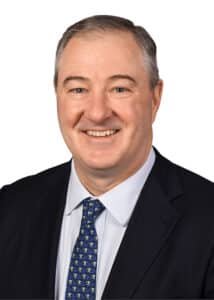
Name: Stephen Thomas, M.D.
Position: Director of the Global Health Institute and interim vice president of research at SUNY Upstate Medical University; distinguished professor of microbiology and immunology; professor of public health and preventive medicine
Hometown: Albany
Education: Albany Medical College, doctor of Medicine degree (1996)
Affiliations: SUNY Upstate, Crouse Hospital, Syracuse VA, Auburn Community Hospital
Organizations: Infectious Diseases Society of America, American College of Physicians, American Society of Tropical Medicine and Hygiene.
Family: Wife (Erica), children (Charlie, 19; Laney, 11)
Hobbies: Travel, golf, music, food, wine