

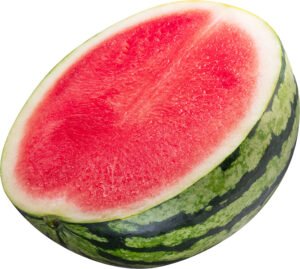
 Nothing announces “summer is here!” quite like watermelon. But what are we really eating? Sugar and water? Empty calories?
Surprisingly, no.
Watermelon is a nutritional powerhouse, packed with benefits that promote good health and longevity.
Water is this fruit’s most abundant and important nutrient. Yes, water: 92% of its content.
While most of us drink water daily, many of us don’t really think about it the way we think about protein or carbs. And yet, of all the nutrients, water is the single, most vital nutrient for human survival.
I deliberately drink more water these days because, well, I have to drink more water. No spring chicken, I need water for my creaky joints, slow digestion and dry skin.
Plus, I seem to have better focus and fewer headaches when I’m fully hydrated.
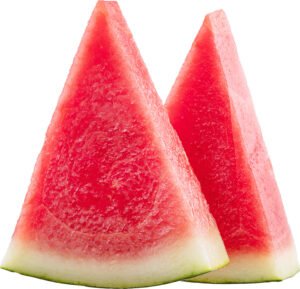 Considered a superfood, watermelon also boasts a rich supply of lycopene—a powerful antioxidant that’s remarkably good for hearts. Research suggests that lycopene may lower blood pressure as well as protect the body from oxidative stress by preventing or slowing cell damage. Additionally, studies have found that lycopene may reduce bad cholesterol while increasing good cholesterol.
Low-calorie watermelon can be a great choice for those trying to reach or maintain a healthy weight. Packed with satiating nutrients—water and fiber—watermelon can help you feel full longer. One cup of diced watermelon has only 50 calories.
Refreshingly sweet, watermelon does not have a lot of sugar. One diced cup has only9 to 11 grams, about the same as 1 cup of berries, 1 banana, or 1 small apple. Its natural, unrefined sugar takes longer to digest than the highly refined sugar present in many breads, pastries, and sweets, a benefit that also promotes satiety.
Is watermelon safe for diabetics to eat? Yes, says the American Diabetic Association, but with vigilance. The ADA recommends eating smaller amounts alongside foods that contain plenty of healthy fats, fiber and protein.
Helpful Tips
Look for symmetrical watermelons with a yellow spot. The spot means the fruit was allowed to fully ripen before being picked, which yields more lycopene and a sweeter taste. Also, the heavier the fruit, the juicier the slices. Wash and slice within days of purchase; refrigerate leftovers.
 Watermelon and Tomato Salad
Serves 4-6
Adapted from cookbook author, Sam Sifton
Ingredients
1 small seedless watermelon, cut into 1-inch cubes (about 4 to 5 cups)
2 cups cherry tomatoes, halved
1 teaspoon kosher salt
1/4 cup extra-virgin olive oil
2 tablespoons sherry vinegar (or rice wine vinegar with a pinch of sugar) kosher salt and coarse black pepper, to taste
1/2 cup crumbled feta or goat cheese
1/4 cup basil, slivered (more if preferred)
Instructions
Heat oven to 375˚F
1. Combine the prepped tomatoes and watermelon in a large, nonreactive bowl. Add salt, toss gently, and let stand 5 to 10 minutes while you prepare the dressing.
2. Whisk together the oil and vinegar and season with salt and pepper to taste.
3. Drain mixture and return to bowl. Add the cheese to the watermelon and tomatoes, then the dressing, and toss gently to combine. Garnish with slivered basil and more cheese.
 Anne Palumbo is a lifestyle columnist, food guru, and seasoned cook, who has perfected the art of preparing nutritious, calorie-conscious dishes. She is hungry for your questions and comments about SmartBites, so be in touch with Anne at avpalumbo@aol.com.