
By Matthew Liptak
As GLP-1 weight loss drugs have stormed onto the American healthcare landscape, becoming popular with both patients and Big Pharma’s bank accounts, local bariatric surgeries have seen declines in scheduled operations of up to 30%.
But many bariatric surgeons welcome the newcomers to the weight loss lineup, as long as their use comes through an educated medical decision.
Bariatric providers know the GLP-1s are impacting their bottom line. But the drugs, such as Ozempic and Zepbound, add an option for obese and sometimes morbidly obese patients.
Sometimes the patient is even the bariatric surgeon.
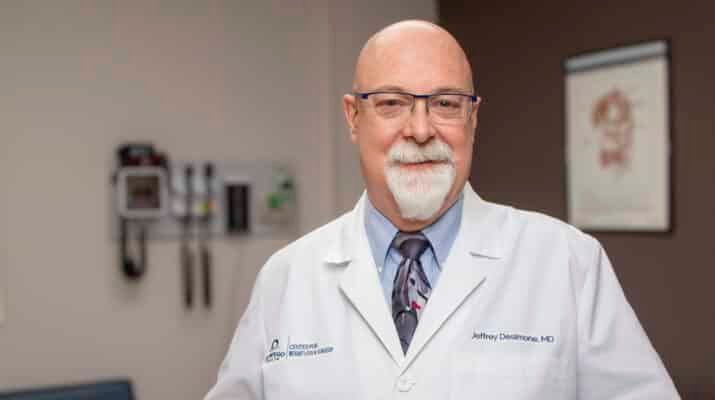
Jeffrey DeSimone is a bariatric surgeon at the Center for Weight Loss & Surgery at Oswego Health Medical Practice. He has been a surgeon for 33 years, largely focusing on performing bariatric surgery since 2004.
“I lost 55 pounds and my blood glucose is under control,” he said. Standing at 5 foot 10 inches, the surgeon did weigh 225 pounds. He is now 170 pounds and considers himself a proponent of GLP-1s, where they are discerned by a doctor to be the proper course of treatment. He noted that both the drugs and surgery can work on similar physiology. But both have drawbacks and advantages.
Surgery, while vastly improved from when he first performed one during his residency 33 years ago, continues to be minimally invasive and carries up to a 1 in 1,000 mortality risk, DeSimone said. They do offer a potentially life-saving treatment to those requiring major weight loss, as surgery on the stomach allows for more weight loss proportional to body weight. And high obesity can put a person in danger of sudden medical emergencies.
Surgery is also a bit simpler in some ways. Once bariatric surgery is completed and the patient has recovered from it, they are on a journey of a new diet lifestyle, primarily regarding portion size.
Current understanding of GLP-1s, DeSimone said, is that the drugs should be taken for the rest of the patient’s lives. They can also have side effects, including nausea and digestive challenges.
“When taken off the medication, patients put back on two thirds of the weight within the next six months,” DeSimone said. “That would imply at least, patients need to be kept on these medications long-term.”
He said maximum doses of Zepbound are known to take off potentially 21% of a patient’s body weight. Interestingly, both surgery and GLP-1s take advantage of some of the same biological processes, leading to the regulation of glucose and eating lower volumes of food.
The other side of any medical practice is the business one.
While many insurances pay for bariatric surgery, GLP-1s may be a harder sell. Patients can pay potentially $1,000 to $1,200 a month out of pocket for them or possibly get them for half that through the manufacturer.
Even though the price may be steep, patients have been flocking to the drugs for more than a couple years now and bariatric surgeries have dropped as an apparent result of the new medicine.
GLP-1s are big business and some are concerned.
The American Society for Metabolic and Bariatric Surgery came out with a report on a new study in May stating bariatric surgeries in the United States have fallen to less than 200,000 surgeries per year for the first time in more than a decade.
“While we did not study causation, the concern is that many patients are selecting non surgical therapies for obesity without fully understanding all of their available options,” said lead researcher Tyler Cohn, an associate professor at Loyola University Medical Center in Maywood, in a news release. “Millions more are living with obesity and are not receiving treatment at all.”
Fewer than 1% of people eligible for weight-loss surgery now get it in any given year, according to the ASMBS.
But other providers see opportunities to seek better health for patients in the surgery downturn.
“GLP-1s are starting a conversation in doctors’ offices that really wasn’t happening as much as it should have been,” said physician Richard Peterson, who reviewed the findings and was interviewed by HealthDay reporter Dennis Thompson. Peterson is a professor of surgery at UT Health San Antonio and ASMBS president.
Back in Oswego, DeSimone remains pragmatic, but upbeat.
“It’s going to change the landscape but not completely eliminate surgery. Not now at least,” he said. I think there’s still a role for surgery. This is a multi-billion-dollar market. The pharmaceutical industry is scrambling to find more medications and they will likely find more.”