
By Matthew Liptak
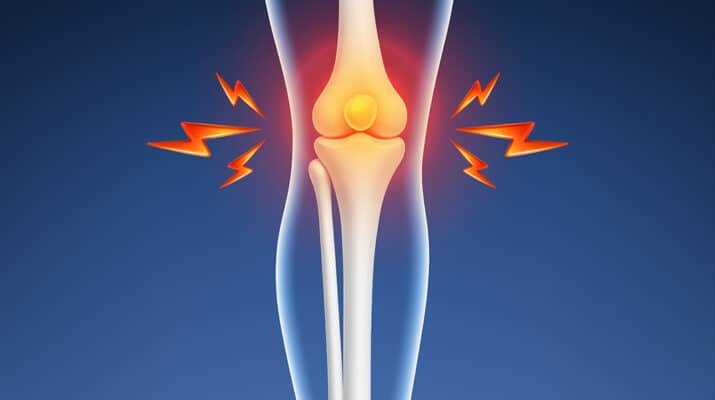
Low-dose radiation therapy, a noninvasive, painless X-ray treatment that uses a small, targeted fraction of radiation to calm inflammation, ease chronic pain and improve joint function, is allowing for remarkable mobility in many osteoarthritis patients in Central New York and beyond.
Once mothballed in the U.S. because of fears of radiation, an outstanding decades-long track record in Europe is renewing its use here in America — and in Central New York.
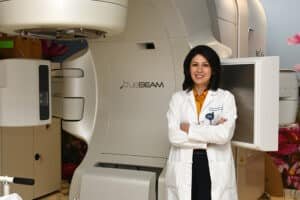
Physician Anna Shapiro, a professor of radiation oncology and vice chair for clinical affairs at SUNY Upstate Medical University, is a big proponent of low-dose radiation.
When her father, a retired contractor who still likes to do projects, was forced to alter course because of bad osteoarthritis in his fingers, she wanted to help him.
“For large joints like knees and hips, you have surgical options, you have injections,” Shapiro said. “There’s some, you know, physical therapy. There’s not a lot you could do for small joints like on your fingers. And it’s very limiting because he [her father] is a retired contractor. He did a lot of things with his hands. He would sit around and just massage his hands, so it was heartbreaking.”
Not satisfied, she jumped into researching to see if there might be options. There was at least one. LDR — or low dose radiation — therapy has been about 80% effective for the patients she’s provided it for since she found it.
The anti-inflammation benefits of this type of radiation have been well-known for a very long time. Shapiro —who in October was appointed as co-director of the Upstate Cancer Center’s Breast Cancer program — said one of the first research papers that came out after X-rays were discovered for medical use was on the impact of radiation on joints. But the therapy was largely shelved in the United States in the 1980s due to concerns of cancer.
In Europe though, medicine persisted with LDR, bringing it to its modern state of effectiveness.
“We always worry about radiation exposure. But in fact, there have not been any reported cases of radiation-induced malignancy after this treatment in Germany [with] their many decades of experience. But of course, I do talk to patients about checking the skin for new moles,” she said.
An LDR dose is about 5% of the dose a cancer patient might get, Shapiro said. Even so she doesn’t usually consider it the first line of healing for most new osteoarthritis patients. But for some chronic sufferers, the impact can be “life-changing” she said.
The mechanism of the therapeutic value of LDR is pretty well understood by doctors.
“So, the mechanism is based on an inflammatory cascade,” Shapiro explained. “When you have bone on bone, it’s very irritating to the body and it stimulates an inflammatory process. So, the joint and the blood vessels become leaky. Inflammatory factors leak out into the joint space, into the joint capsule and recruit other inflammatory factors. So, you have this cascade that causes a lot of inflammation and swelling. That’s where radiation works. It stops the vessels from being leaky, from letting out all of the inflammatory factors. In fact, it decreases pro-inflammatory factors, [and] it increases anti-inflammatory factors at the same time. It promotes healing. It decreases inflammation.”
One of Shapiro’s patients, an MRI tech at Upstate, Robert Ratliff from Montezuma, said the therapy has been a true “life changer.”
Because of using LDR on his knees, he’s been able to get back to the gym to do CrossFit exercise. He has lost 80 pounds since November of 2025.
Ratliff’s lifestyle has changed for the better since his very first LDR dose at Upstate.
“She told me I’m going to take this pain away, you know, because I’m going to need knee replacements,” he said. “And it’s been fantastic.
“Like, I was able to get back to the gym. I’ve lost 80 pounds. Before, it was hard for me to do anything, squats, all sorts of stuff. You know, there were days I’d get up. I’d feel good. Other days, I could barely walk. This has really worked, not just after three days, but consistently for a long time.”
Shapiro said LDR treatments can be given on multiple instances over time and the benefits can last from months to upwards of a couple years for patients. Eighty percent of patients report some benefit.
The procedure is relatively straightforward, with a planning session, often accompanied by a CT scan and maybe records of previous scans of the joint. But then the patient simply sits in a room for the radiation to be applied, with the joint being isolated when needed by forms to keep it still for the application.
New patients are being accepted by Upstate and Shapiro mentioned that Hematology-Oncology Associates of Central New York also offers this type of treatment.
Demand and word-of-mouth are spreading about LDR, even though Shapiro said her office has done no marketing for the therapy.
“It’s a very helpful treatment,” she said. “I can tell you that in our radiation oncology society meetings, we have four or five throughout the year, every conference in the past two years, had a session on low dose radiation.”