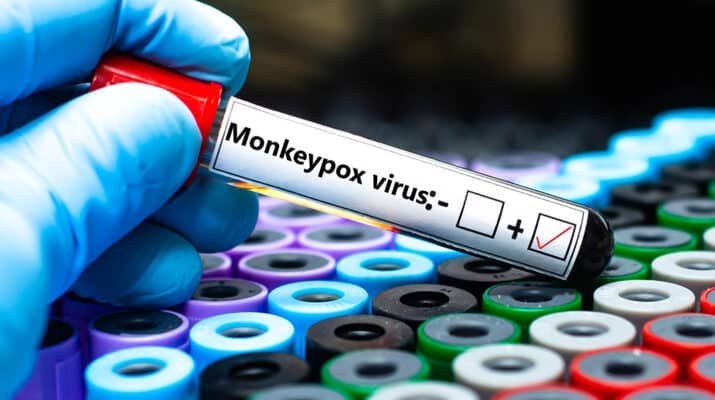
Zika, bird flu, swine flu, monkey pox, hantavirus, Ebola. How seriously should we take the next would-be pandemic?
By Deborah Jeanne Sergeant
 About every 12 to 18 months, it seems like another would-be pandemic is introduced — or re-introduced — in the news.
Zika, bird flu, swine flu, monkey pox, hantavirus, Ebola and more have threatened to become another pandemic. And of course, effects from the COVID-19 pandemic still ripple today.
But why do these events happen and how should we respond?
Syracuse University’s David Larsen, Ph.D., professor of public health and infectious disease epidemiologist, said that events such as those are “pretty typical,” even before COVID-19. “We live in a world with lots of these types of pathogens.”
One of the differences between now and 200 years ago is that the globalized population can more readily spread communicable disease instead of keeping it more contained once it’s recognized. With more than 100,000 commercial airline flights around the world every day, plus travel across and among the continent by other means, it’s easy to see how communicable diseases travel quickly in modern times.
In addition, information travels more quickly and broadly. Generations ago, newspapers and postal letters would disseminate the news. With so many means of sharing the news, those doing so often feel compelled to create dramatic headlines. Fearmongering provides a simple, straightforward means to attract attention.
“We don’t necessarily know if the outbreaks are more frequent,” Larsen said. “There’s some evidence zoonotic diseases are increasing as we’re encroaching more on wild spaces. Agricultural practices today are better than they used to. We have less lived-in time with animals. We used to house ourselves with animals. We have pasteurization of milk, which is a big advance and hygiene improvement and refrigeration”.
Zoonotic diseases are those spread directly from animals to people.
 Larsen said that relying on public health information can offer guidance as to how seriously people should take this kind of news. He added that regardless of contagions in the news, steps like proper handwashing and general hygiene go a long way to supporting good health.
People should also look at the correlation to person, place and time.
“How close do you live to the outbreak?” he said.
Ebola in Republic of the Congo is unlikely to affect someone living in the US unless that person travels to the area or comes in close contact with someone who has. Note how easily the disease spreads and how many people currently are sick with the disease.
Education is key, according to physician Stephen J. Thomas, SUNY distinguished professor and director of Global Health Institute at SUNY Upstate Medical University.
“That’s become more challenging given the volume of misinformation and disinformation circulating today,” he said. “I encourage people to rely on multiple credible sources and look for consistent facts across them. Trusted organizations like the WHO, CDC and state and local health departments provide measured, evidence-based guidance.”
 Avoid relying upon social media posts and verify those that appear to be made by trusted news sources.
“Most people have extremely low exposure risk for Ebola, hantavirus or emerging tropical diseases,” Thomas said. “But we’re all at risk for illnesses like influenza or COVID-19.”
Note how ill infected people become. For a typically healthy person, a communicable disease may not cause serious illness but may only affect a vulnerable person such as someone who is immunocompromised, elderly or infants.
Communicable diseases in some parts of the world cause catastrophic numbers of infections because of a lack of sanitation and effective healthcare.
“Ask yourself, ‘If I were infected, would I be in a place where I could receive good medical care?’” Thomas said. “’Does my baseline health put me at higher risk for a bad outcome?’ Knowing the answers tells you where your ‘worry meter’ should be set.”
Take heart that the medical community, in particular the local and statewide health departments, keep watch for communicable illness threats.
 “Understandably, people are concerned about learning of newly discovered biological threats,” said physician James Alexander, senior medical director with Onondaga County Health Department. “Outbreaks of diseases occur worldwide, but most are limited by rapid, informed responses from strong public health systems. Central New York has experienced teams, prepared hospitals and clear response plans. We monitor potential threats every day, so residents don’t have to.”
He added that when a new variant of a communicable illness manifests, it makes people want information so badly that they may more readily accept misinformation.
“Our community has knowledgeable health professionals dedicated to keeping up to date as new information emerges, so you can rely on receiving accurate, timely, science-based information,” Alexander said. “Your decisions have an impact on our entire community. Staying healthy, keeping up to date with vaccines, practicing good hygiene and relying on trusted health sources benefits us all. A healthy, knowledgeable and cohesive community is better prepared to respond to a health threat, as we have proven in the past. There is no need for alarm; staying informed and taking simple precautions is the most sensible path forward.”