
By George W. Chapman
 The Trump Administration quietly launched a surveillance program aimed at collecting identifiable personal and health data of anyone receiving care in an emergency room. The Consumer Product Safety Commission, which is tasked with tracking injuries from household items, was pressing hospitals to turn over private patient data on anyone who received care in their ER for more than 10,000 injuries or conditions. You can imagine the pushback from hospitals. In a letter to the acting director of the CPSC, Peter Feldman, Sen. Ed Markey of the senate Health, Education and Labor Committee wrote, “This unprecedented and sweeping effort to collect identifiable patient data is untethered from the CPSC statutory mission and authority and is ripe for misuse by an administration that has repeatedly sought access to America’s most personal information. Americans should be able to seek medical care without the fear that their personal health information will be swept into a federal database and repurposed for political ends.” The American Hospital Association expressed “confusion and concern about the scope of patient information.” The CSPC has started to backtrack saying the surveillance program “would remain voluntary.” Hospital execs will tell you that being threatened with fines didn’t give them the impression the program was ever “voluntary.’
 Artificial Intelligence Improves Hospital Care
Researchers at the Robert Wood Johnson Medical School found that an AI-based early warning system embedded in their electronic medical record predicted those high-risk patients at risk of sudden rapid decline. Their study included 23,000 high-risk patients across 11 RWJ hospitals. The early warning system reduced high-risk patient deaths from 23% to 18%. The Epic Deterioration Index (EDI) assesses patient risk of failure four times an hour and constantly updates rapid response teams. Rapid response increased from 25% to 38% in the study. Physicians, nurses and ancillary professionals, who were initially skeptical of EDI, quickly became advocates.
 United Healthcare Reduces Prior Authorization
Perhaps the ignominy of leading the industry in claims requiring prior authorization (30%), let alone the negative feedback from providers and patients, (declining sales, bad press?) United will magnanimously eliminate more than 1,700 treatments from their ineffective and costly prior authorization gauntlet. It will be effective Oct. 1 this year. This is long overdue. After the unnecessary hassle, more than 90% of claims-denials were eventually overturned. Prior authorization is expensive to both insurers and providers alike. It is basically a delay delay, delay strategy.
 Vaccinations and Religious Freedom
In what has to be called a nice try, a Catholic woman argued in court that her faith forbids her to accept vaccines for herself or her son. She claimed “vaccination injects biological material derived from unclean sources directly into the bloodstream. My faith forbids this.” The court sided with the public health goal to protect the general population from disease. Interestingly, so does the Catholic church, which is not against vaccines. It strongly supports vaccines as a way of promoting the common good.
Universal Healthcare
Come on. It deserves, at least, serious consideration. All we get now are mere Band-aids (usually from special interests) to a system that is expensive, fragmented, confusing and discriminatory. More than 70 countries provide universal healthcare. And, yes, paid for by taxes. But a typical premium for a family of four in the USA is now more than $25,000 a year. So, let’s do the math when giving Medicare for All consideration. Cost is important. Among notable countries providing universal coverage are England, France, Germany Spain, Canada, Australia, Japan, Brazil, Mexico, Sweden, Norway, Denmark, Finland, South Korea, Italy, Switzerland, Netherlands, China, India, Philippines, Israel, Saudi Arabia, Thailand, Turkey, New Zealand and South Africa. No system will be perfect. But among the 70 countries with universal coverage, to my knowledge not one of the 70 has reverted to our “system.”
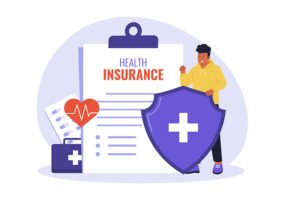 Commercial Plans Abandon Markets: Wouldn’t Be time to Consider Debating Medicare for All?
Commercial-employer insurers have been leaving unprofitable markets for years, and the trend continues. Several commercial insurers have abandoned employer clients to focus exclusively on government plans such as Medicare and Medicaid.
(So that’s where the money is?) For example, Centene has recently announced it will exit the commercial markets in California and Oregon early next year. Unless another plan rushes in to fill the void, less competition will ultimately lead to less choice and higher premiums for employers and their employees. Not good. The Marsh National Survey of Employer Sponsored Health Plans predicts an 8% increase in premiums for large groups and an astounding 14% increase in premiums for small groups. Obviously, employees will end up paying more in out-of-pocket expenses. So, commercial plans are pulling out of “unprofitable” markets while many commercial plans are pulling out of the commercial employer sponsored insurance market altogether. It is resulting in higher prices, less choice and more confusion. Both insurance and hospital monopolies are developing in a lot of markets. Where are we going? It’s time to seriously consider-debate-study Medicare for All.
 George W. Chapman is a retired healthcare business consultant who worked exclusively with physicians, hospitals and healthcare organizations. He used to operate GW Chapman Consulting based in Syracuse.