
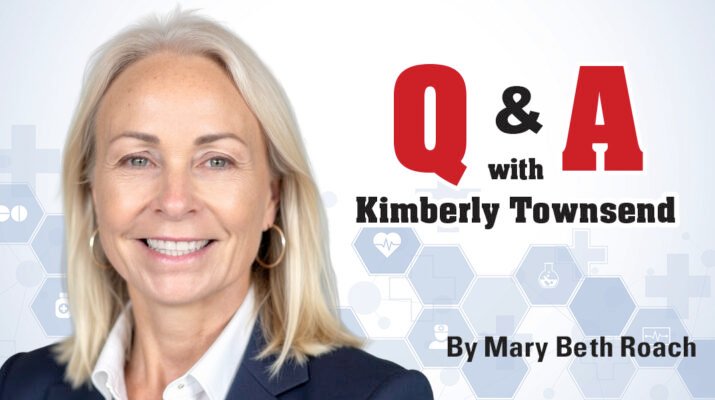
As Loretto celebrates its 100th anniversary, its president and CEO reflects on the nonprofit’s history and outlines what comes next
By Mary Beth Roach
 Q: Can you give us a brief overview of Loretto?
A: Loretto is a comprehensive long-term care health system. We are a safety net provider and as a comprehensive system, we have all of the services that adults need outside the hospital. We have short-term rehabilitation. We have long-term care, nursing home care; we have various housing programs — so the full spectrum — from independent living to assisted living to memory care. In a continuum of care, we have our home and community-based program, which is PACE CNY. We have 19 sites and programs in all and we are in Onondaga County and Cayuga County. We take care of roughly 10,000 people a year. We are a safety net provider, meaning that 75% of the people we care for each year are individuals who are supported through the Medicaid program.
We’re the fourth largest healthcare employer in Central New York. We have roughly 2,400 employees. That, in part I think, is due to the fact that we are the only healthcare provider in the area that I’m aware of that offers paid training programs for our home health aides as well as CNAs [certified nurses aides].
Q: Why was Loretto started 100 years ago?
A: Before Medicare, Medicaid, Social Security, there was no safety net as people age. In 1926, if you were aging in this community and you did not have a family member to care for you, then you wound up at the county poor farm, which was a prison that they put people into who didn’t pay their bills. It was a debtors’ prison. So, the Roman Catholic Diocese of Syracuse and the Sisters of Saint Francis felt that that was an undignified end to a good life. They came together to form the original Loretto Rest, which was one of the first diocesan homes for the aged in North America. Ten Sisters opened the facility and cared for 100 residents from the community who had no other means of care. Today, those are still our pillars — partnerships, innovation and desire to solve big social problems and problems associated with aging in our community.
Q: As it celebrates its 100th anniversary, what do you see as some of Loretto’s major accomplishments or milestones?
A: Loretto is known as a national thought leader in long-term care. We have the only continuum of care in the Central New York region, which is the Nottingham, which was a very innovative concept in the ‘80s to have all levels of care on one campus. Another very innovative program was the inception of PACE CNY, which was one of the first PACE programs in the United States. That is a program where if someone would ordinarily be in a nursing home, because of interdisciplinary team care, they can be cared for in their home.
We continue to innovate. We have heard from our hospital partners that finding short-term rehabilitation with dialysis is very challenging in the community, so we will be opening up a dialysis den in our main campus facility [on East Brighton Avenue] this month [September] to meet that need.
We just continue to be out there as a nonprofit mission-based organization that exists for the benefit of the community. We continue to be always out in the community speaking with partners, trying to understand what the needs are of the community now and what we anticipate the needs of people will be in the future.
Q: Within the last 10 years or so, Loretto has been hit with a lot of challenges — the pandemic, staffing shortages, constant changes in Medicare and Medicaid and a growing older population. How have these impacted Loretto?
A: I would say the most challenging issue that we have as a safety net provider is the New York State Medicaid rate for long-term care, which is one of the lowest in the country. Seventy-five percent of the individuals we care for each year are supported by the Medicaid program, which currently pays roughly $100 per person per day, below the cost of care, so an artificially low rate for many of our residents. That’s probably the most challenging problem for us because it’s a large gap to fill.
From a workforce perspective, during the pandemic, many people left the healthcare workforce and while many have returned to the hospital sector, fewer people have returned to the long-term care sector. The way we try to address that is by offering paid training programs. We have an LPN apprenticeship program to try to grow our own staff and help create career ladders. But what we find is most important to employees is that they want to have a living wage, access to benefits and a path to personal and professional growth that’s clear to them as they work here in Loretto.
Q: Looking ahead, what do you see or what are you planning for Loretto?
A: Because of the aging demographic of the U.S. population, experts anticipate that 70% of people 65 and older in the future will need long-term care. So, we are anticipating a continued robust demand for the services that we have. We are now seeing an age range of our patients, anywhere in their 40s to people who are well over 100 years old. So that’s really different than what we’ve seen in the past. That changes some of the ways that we work. For example, we are seeing more people with dementia, so we have the most comprehensive dementia services in the Upstate New York region, offering care from the home to assisted living to memory care facilities to our long-term care. We’re really a key piece of the health care network here in Central New York. Our hospitals rely on us to continue to evolve, to meet their needs, as they try to discharge individuals to make access within our hospitals.
Because we are a nonprofit and mission-based, we likewise understand that most families and individuals do not want to think about long-term care until they need it. We try to support people and let them know that when you need us, we are here for them. We also try to just assist people with meeting their educational and informational needs. Last year we launched our podcast, “Aging Well” and it covers a broad range of topics that can help people also familiarize themselves with long-term care before or when they need it.