
Syracuse VA new executive director: ‘The largest challenge [we face] is not to rest on our laurels’
By Mary Beth Roach
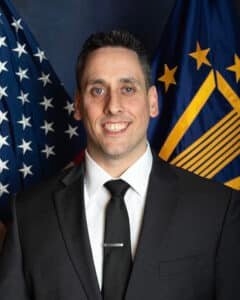 Q: At the end of February, you were named executive director of the VA Syracuse Healthcare System. What are your responsibilities?
A: I am ultimately responsible for the quality and delivery of care from our 13-county catchment area, from the Canadian border down to the Pennsylvania border, across the seven CDCs [community-based outpatient clinics] and the main medical center.
Q: Can you give our readers an idea of the scope of services, how many employees you have, how big the coverage area is and how many patients the system sees in a year?
A: We serve roughly 46,000 veterans. Our catchment area is roughly the size of the state of Vermont; roughly 1,600 to 1,650 employees to take care of those veterans. We are a tertiary medical center. We can do everything but trauma, burns, gunshots. If it’s something we do not do, we coordinate in the community for that care and we are currently hiring for more. We have social work for the grant and per diem housing services for homeless veterans.
We also have dental services, as well as pharmaceutical, radiological services. We’re a full-encompassing facility. We do have a 28-bed nursing home in our facility on the eighth floor. [The grant and per diem program is a VA-funded program where it partners with approved community agencies to provide transitional housing for homeless veterans. The transitional term is defined as housing for less than two years with a community agency who assists the veteran with locating permanent housing, during this time they will do things like securing income, improving credit score and housing search with VA oversight.]
Q: Prior to your appointment as executive director, you were associate medical center director at the Syracuse VA. How long have you been associated with the local facility and how do you think that experience has prepared you for your new role?
A: I’ve been at the Syracuse VA for eight years. I joined originally as the ambulatory care line manager. I was the head administrator for telehealth, whole health, all primary care and outpatient clinics, as well as emergency department and our home-based primary care department. I started in 2018 and then in 2021 I became the associate medical center director, for which I was responsible and accountable for all of the non-clinical services. That means engineering, housekeeping, the safety department, as well as privacy services. What this allowed me to do was see different levels of the facility from the inside and see the commitment, compassion and passion that people have. I’ve worked at other VA medical centers and I was very happy to be able to come home. My wife is from this area. I’m originally from Canandaigua. It was nice to be able to grow and develop near family and provide care for those veterans who I saw growing up.
Q: Medical care has changed significantly. How has the Syracuse VA been able to keep pace with all that?
A: We want to ensure we’re hiring the right people and providing education for those we have on board with the newest services. We have a very strong partnership or affiliation with Upstate Medical Center. One of our foundational missions has been education. It’s become part of our culture — if we’re going to do something, do it well and let’s make sure that we’re looking at all processes to do that.
Q: As you embark on this new role, what do you see as the biggest challenge the system faces now?
A: I would say the largest challenge is not to rest on our laurels. We have extremely high, what the VA calls, “trust scores.” The VA looks at a couple of different questions, but the gist of it is, “Do you trust this VA to take care of you?” And the Syracuse VA has been a positive outlier across the nation for our veterans, trusting us to take good quality care of them. I do not want to lose that trust and I want to garner more. Make sure that we continue to push the envelope, continue to hire the right people and find the right leaders to lead this organization.
Q: What is your vision for the system moving forward?
A: Right now, we have some key leadership vacancies as an organization. We have vacant associate medical center director; we have a vacant chief of staff or chief medical officer at this facility. So, my immediate needs and wants are to fill those key leadership roles. From there, it is ensuring that we have the right people in the right places in terms of leaders and physicians and nurses to ensure great quality care across the organization and resourcing that appropriately.