
By Deborah Jeanne Sergeant
Community-based cancer care organizations provide patients with longer survival compared with hospital-based cancer care facilities, according to a study by Flatiron Health and Community Oncology Alliance.
“Community oncology” refers to physician-owned and -led independent oncology practices not owned or operated by a hospital, health system, academic medical center or health insurer.
The study compared the survival of patients who had advanced non-small cell lung cancer and breast cancer.
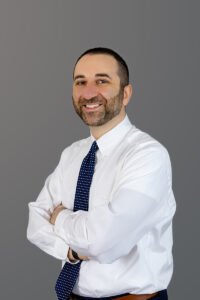
“They wanted to see if patients with advanced case disease how they would fare according to databasematched controls,” said physician Tarek Sousou, president and board member of Hematology-Oncology Associates of CNY in East Syracuse. “The concept of survival is the gold standard metric in controlled trials. These cancers are common.”
The research indicates that community care patients tend to stick with their treatment protocol more than those receiving treatments at a large medical campus. On average, breast cancer patients lived eight months longer and lung cancer patients lived two months longer.
“We think of things as time-specific which is easier to explain,” Sousou said. “Year five is a big benchmark. It means your overall outlook is favorable. For breast cancer patients, a larger percent make it to three years and similar results for the lung cancer.”
In the study, 14% made it to five years, compared with 9% of those treated in non-community-based facilities.
Sousou said that the patients were stage 4 in the disease. Whether their remission lasted was unknown.
“We may not be able to cure them but they have a more favorable prognosis,” Sousou said. “These patients aren’t typically considered curable with conventional means.”
Community cancer centers offer many advantages such as closer proximity compared with an academic hospital. Spending more time driving to and from treatments adds additional stress and expense for patients and their families. This may be part of what helps promote greater longevity for patients treated at community cancer centers.
“When patients have access to care delivered at a community oncology practice, those patients do well,” Sousou said. “Oncology care remains on the cutting edge of cancer treatment. These patients are living longer than their cancer-managed controls.
“It proves that community oncology does provide a high quality of care and expanded access only helps patients. Everyone knows someone who’s unfortunately touched by lung, breast or both so it’s a highly applicable study.”
The study was commissioned by the Community Oncology Alliance (COA) and conducted by Flatiron Health. The study showed that community oncology practices exceeded the national benchmarks for patient longevity by eight months and the median survival for patients after one, three and five years were higher as well.
“Where people receive cancer treatment matters,” said physician Debra Patt, president of COA and executive vice president of policy and strategy at Texas Oncology. “Community oncologists deliver care associated with longer survival, which means more time spent with family and friends. Amidst an uncertain business and regulatory environment, community oncology must remain a viable option for patients who depend on it every day, in communities across the country.”
The research looked at data from nearly 98,000 patients treated by community oncology practices between January 2013 and December 2022 compared with estimates from the National Cancer Institute’s Surveillance, Epidemiology, and End Results (SEER) database, a widely recognized national standard for cancer surveillance, including cancer mortality, in the United States.
“Provider partnership is central to how we work at Flatiron, and this collaboration reflects our commitment to advancing care in the community oncology field,” said Quincy Weatherspoon, VP and general manager for point–of–care solutions at Flatiron Health. “By combining our research-ready data with COA’s advocacy voice and relationships, we’re helping bring greater clarity to the realities of care in community oncology—and turning those insights into actionable data and better patient outcomes.”